HSBC: VN’s GDP growth poised to rebound 8.1% in 2021

21:39 |

 With a tech-led recovery and consistent Foreign Direct Investment (FDI) inflows, Viet Nam’s economy is set to rebound strongly by 8.1% in 2021, according to HSBC’s latest report titled “Asia Economics: It's About Stamina”.


Meanwhile, HSBC also revised down its GDP growth forecast for Viet Nam from 3% to 2.6% in 2020, accounting for the negative impact of the second wave.

High frequency mobility indicators are now suggesting a strong rebound in economic activity, back to pre-pandemic levels.

Moreover, the external sector continues to improve. Exports rose over 7% year-on-year in July and August, thanks to strong growth in computer shipments that have more than offset the weakness in garment products.

To help boost the economy, Viet Nam’s government has so far announced stimulus packages worth VND279 trillion (US$12 billion or 4.4% of GDP), consisting of tax deferrals and direct cash hand-outs to poor households, the report stressed.

Referring to challenges and risks for Viet Nam’s economy in the upcoming time, the report said that headline unemployment rate climbed sharply to 2.7% in the second quarter, with urban jobless rate jumping to its highest level in a decade of 4.5%.

Externally, subdued global demand remains a risk to Viet Nam’s manufacturing sector. This is particularly relevant to the country's textiles and footwear industries, where export orders have been hard hit.

HSBC supposed that the second COVID-19 wave in July will likely result in the government adopting a more cautious policy toward opening its borders, thus tourism will likely bear ongoing challenges until there is an effective vaccine.

HSBC is one of the world's largest banking and financial services organizations, with operations in 64 countries and territories. It serves more than 40 million customers through global businesses: wealth and personal banking, commercial banking, and global banking & markets.
Notable achievements during Vietnam’s 75 years

21:35 |

 This September marks 75 years since the Vietnamese people, under the leadership of the Communist Party of Vietnam (CPV), overthrew 80 years of French colonial rule.


President Ho Chi Minh on September 2, 1945, declared independence for the Democratic Republic of Vietnam and the country then recorded significant victories in its resistance wars against the French and the Americans as well as in its cause of doi moi (economic reform).

Tremendous achievements have been posted in a range of endeavors over the last 75 years.

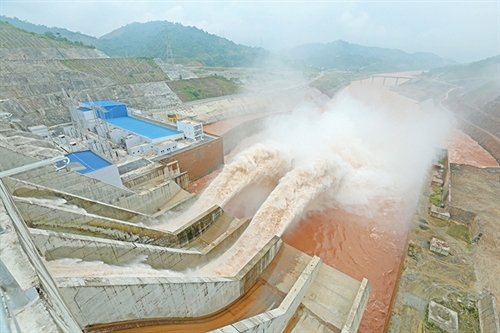
Lai Chau hydropower plant__Photo: Huy Hung/VNA

Political system

On January 6, 1946, the first election for the country’s National Assembly (NA) was held. In combat zones throughout then-South Vietnam, elections took place amid fierce circumstances and even bloodshed as every Vietnamese citizen exercised their democratic right to vote.

Following the success of the election, the NA, at its first session on March 2, 1946, elected its Standing Committee. The Democratic Republic of Vietnam was officially established, with the NA as the highest state power and the Government, elected by the NA, as the highest administrative body.

That was the State of the nation, by the nation, for the nation, which had full legal capacity to carry out key national tasks - the resistance wars and the construction and defense of national independence and freedom.

For the last 90 years, the CPV has been at the vanguard of the struggle for national independence, liberating the country from almost a century of domination by Western colonialists and leading the people to full victory in the 30-year resistance war against powerful aggressors. Since the country’s reunification, the Party has led the Vietnamese people in carrying out renewal, modernization, and industrialization.

The CPV takes Marxism-Leninism and Ho Chi Minh Thoughts as its firm ideological foundation, guiding its activities, promoting its traditions, and absorbing the essential ideas of other nations. By grasping objective laws, epochal trends, and the country’s reality, the Party developed sound political programs and revolutionary policies that meet the aspirations of the people.

Important changes were also made to the functions of state administrative bodies, including the Government, ministries, and People’s Committees at all levels, in line with the transition to a socialist-oriented market economy.

The government apparatus has been restructured on the principle of organizing multi-branch and multi-domain ministries through various stages suitable with managerial capabilities, personnel qualifications, and facilities and conditions, so as to ensure continuity, stability, development, and compatibility with reality.

The Government also improved its method of operation by conducting unified macro-management over political, economic, cultural, social, defense, security, and foreign affairs tasks nationwide through a synchronous system of laws, policies, plans, and other macro-management instruments.

Economy

After the declaration of independence on September 2, 1945, the Provisional Revolutionary Government then held its first session. The primary task for the Democratic Republic of Vietnam was to eradicate starvation and illiteracy.

A war economy had been developed since 1951, the State Bank of Vietnam had been set up, and Vietnamese bank notes began circulating from June 10, 1951, marking an important point in the distribution of goods, trade, and commercial activities.

At that time, Vietnam was still a poor agricultural country, with 80 percent of its population and 70 percent of its workforce living in rural areas and subsisting on farming.

Production was still not enough to meet demand for food.

By 1984, socialist economic sectors and State-owned enterprises (SOEs) held the greatest proportion of total social production. A mechanism based on public property dominated all social production.

Meetings of the Political Bureau and of the 5th Party Central Committee from July to December of 1986 concentrated on compiling and approving a Political Report for submission to the 6th National Congress.

The congress placed special emphasis on improving and enhancing the effectiveness of external economy.
In building a new management system, a major reform of the state apparatus was carried out.

In the 1996-2000 period, GDP increased by an average of 6.94 percent each year. Agriculture posted an annual increase of 1 million tons of food, industry rose by an average of 13.5 percent, and GDP doubled compared to 1990.

Despite devastating natural disasters in 2000 and 2001, GDP still increased by 7 percent and 6.8 percent, respectively, and would continue to grow in the years to come.

Guidelines on development of a multi-sector economy had been carried out effectively. A socialist-oriented market economy had been formed and the macro economy stabilized. With a developing economy and social issues addressed, the lives of the majority of people had been improved.

To revitalize SOEs and enhance the effectiveness of their production and business activities, and to promote competitiveness and regional and international integration while maintaining the key role of SOEs in the national economy, the Government launched a three-year program on restructuring SOEs (2002-2005).

Economic competitiveness was taken to a higher level. Vietnam ranked 78/148 in the Global Competitiveness Index in 2013, and 61/141 in 2019.

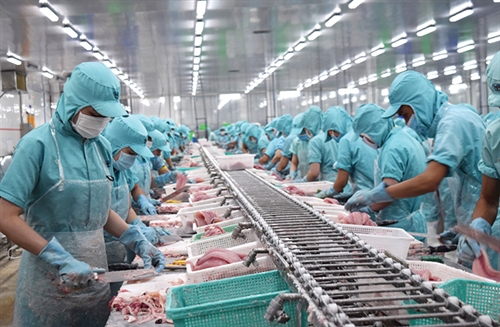
Processing Tra catfish for export to the US market__Photo: VNA

Social welfare

From 1945 to 1954, Vietnam’s first policies on labor rights, employment, and social welfare for war invalids and relatives of war martyrs were issued.

Since 1986, support policies for those who contributed to the country’s revolution and social welfare policies for groups of vulnerable people have been fully implemented.

The rate of social insurance is increasing. Unemployment in cities fell from 4.5 percent in 2010 to 3 percent in 2020. From 2001 to 2006, the country created more than 8 million jobs. The rate of trained workers increased from 40 percent in 2010 to 65 percent in 2020. 

Health

Health outcomes have improved in tandem with rising living standards.

From 1993 to 2017, the infant mortality rate fell from 32.6 per 1,000 live births to 16.7. Between 1990 and 2016, life expectancy rose from 70.5 to 76.3 years - the highest in the region for countries with a similar income level. Vietnam’s universal health coverage index is at 73 - higher than the regional and global averages - with 87 percent of the population covered.

Since the country’s reunification on April 30, 1975, the health sector has made great strides forward and posted key achievements in the care and protection of people’s health.

Regarding the fulfillment of the Millennium Development Goals (MDGs), Vietnam has been able to eradicate polio and control neonatal tetanus, pertussis, and diphtheria. It has maintained an immunization rate of more than 95 percent for under-one children, pregnant women, and women of reproductive age. The rate of malnutrition among under-five children decreased from 30.1 percent in 2000 to 13 percent in 2018, while the rate of stunting malnutrition fell from 36.5 percent in 2000 to 23.3 percent in 2018.

Over the last 30 years of exerting epidemic prevention and control efforts, Vietnam has built up a capacity to monitor, detect, diagnose, and identify diseases and respond quickly and effectively. The country’s capacity to prevent dangerous and emerging diseases has improved, as has available treatment. Preparations for coping with dangerous diseases have also been put in place.

As a result, many dangerous epidemics have been controlled, repelled, and eradicated, such as smallpox in 1978, polio in 2000, and neonatal tetanus in 2005. Since 2002, no case of plague has been reported. Some epidemics could have been hundreds or thousands of times worse had it not been for the expanded vaccination program that began in 1981, such as diphtheria, whooping cough, and measles. Other circulating epidemics such as dengue fever, viral encephalitis, tuberculosis, typhoid, and cholera have also been controlled.

Vietnam was also one of the first countries to successfully control SARS, the A/H5N1 flu, and the A/H1N1 flu, while preventing a number of dangerous emerging epidemics such as the A/H7N9 flu, Ebola, and MERS-CoV.
It has also mastered and improved many world-class medical techniques and been transferred advanced techniques for diagnosis and treatment, such as laparoscopic surgery, cardiovascular intervention, and diagnostic imaging.

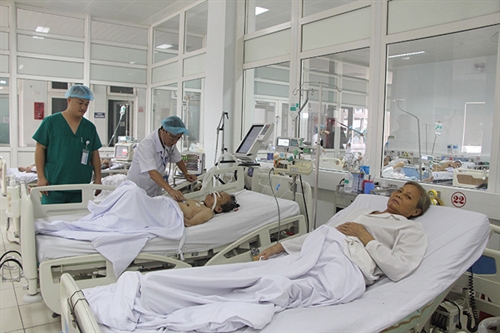
Hospital overload has step by step been reduced thanks to the increase of patient beds by nearly 30,000 at central-, provincial-, and district-level hospitals__Photo: VNA
 

Education

Illiteracy has been in decline since 1986 and about 2.5 million Vietnamese children are admitted to school each year. In 1986, there were 3 million children enrolled in childcare centers and kindergartens, close to 12 million students in general schools, and more than 300,000 learners in vocational and professional schools and colleges.

Vietnam’s accomplishments over the years have been truly remarkable in terms of attendance, completion, and student achievement.

Equality in access to education has seen a host of accomplishments. A network of boarding schools for ethnic minority students has been built, and the country now has 316 such boarding schools in 49 of its 63 provinces and cities.

The Government has been paying a great deal of attention to support policies for the education sector, in particular exemption from or reduction of tuition fees for poor students and a student loan program.

The quality of education has been boosted to a remarkable degree.

Over recent years, Vietnam has expanded enrolments while defining and enforcing minimum quality standards for school facilities. Teacher quality also matters, and the country has laid a solid foundation by professionalizing its teaching workforce and establishing standards around teacher knowledge, skills and disposition.

During 2016-19, Vietnam picked up 45 gold medals, 60 silver medals, 31 bronze medals, and six certificates at international and regional education Olympiads.

Its higher education sector ranked 68/196 in the world in 2019, while three Vietnamese universities were in the top 1,000 best globally in the same year.

Diplomacy

Over the last 75 years, the diplomatic sector has made great strides forward and contributed substantially to the struggle for national independence and reunification as well as the ongoing process of renewal, international integration, and national defense, thus helping elevate Vietnam’s standing in the international arena.

Vietnam has actively joined international economic organizations such as the Association of Southeast Asian Nations (ASEAN) in 1995, the Asia-Europe Meeting in 1996, the Asia-Pacific Economic Cooperation (APEC) in 1998, and the World Trade Organization (WTO) in 2007. It now plays an increasingly important role in ASEAN and its partners, and actively participated in the United Nations (UN) Security Council in 2014-16.

In addition to economic integration, integration in politics-diplomacy, defense-security, and culture-society has also been promoted strongly.

Vietnam has also participated in joint maritime exercises with the US for the first time, within the framework of ASEAN, signed a Framework Participation Agreement with the European Union that will facilitate its contribution to the EU’s Common Security and Defense Policy (CSDP)’s missions and operations, and ratified the Right to Organize and Collective Bargaining Convention (Convention No. 98) of the International Labor Organization (ILO).

The country sent a second Level-2 field hospital to the UN Peacekeeping Mission in South Sudan after the first successfully completed its mission.

The country’s achievements in multilateral relations over the years have boosted its growing international status.
In terms of bilateral relations, Vietnam has maintained stable and positive relations with all countries worldwide and now has 30 strategic partners and comprehensive partners.

Vietnam supports all efforts towards nuclear disarmament, non-proliferation

21:52 |
                                                                  Illustrative image

Deputy Prime Minister and Foreign Minister Pham Binh Minh has affirmed Vietnam’s consistent stance on supporting all efforts towards nuclear disarmament and non-proliferation.

In his message sent to the United Nations General Assembly’s High-level Meeting on October 2 (New York time) to commemorate the International Day for the Total Elimination of Nuclear Weapons (September 26), Minh highlighted the target of a nuclear weapon-free world since the world witnessed the devastations caused by atomic bombs in Japan’s Hiroshima and Nagasaki.

He said it is a legal and moral duty of the international community to save succeeding generations from the scourge of war and the threat to the survival of mankind, to foster friendly relations and peaceful coexistence between all states, and to save the finite resources for social and economic development.

The Deputy PM stressed the need to continue with strides made by the world over the past decades, including upholding the role of multilateral and bilateral frameworks for nuclear disarmament, non-proliferation, and arms control with the global nuclear stockpiles reducing by three quarters since the peak of the Cold War.

Minh called on the nuclear weapons states to step up in their commitment to the obligation to general disarmament under Article VI of the NPT.

Trust in the multilateral disarmament architecture must be re-established, he said, adding that regional architectures need to play a more expansive role in establishing and implementing nuclear weapon-free zones in all areas.

Vietnam, as ASEAN Chair 2020, remains committed to preserving the Southeast Asia Nuclear Weapon-Free Zone, and will continue to engage with all parties to intensify efforts to resolve outstanding issues in the implementation of the Treaty on the Southeast Asia Nuclear Weapon-Free Zone, he stressed.

The Deputy PM added that the rights of states to use of nuclear energy for peaceful purposes must be respected./.

Vietnam sets 17 sustainable development goals to 2030

21:44 |
                                                     A wind farm in Bac Lieu province

The Government has set 17 sustainable development goals to 2030, in Decree No 136/NQ-CP which was issued recently.

Goals include no poverty in any form and anywhere; zero hunger, food security, nutrition improvements and sustainable agriculture development; good health and better social welfare for everyone; quality, equal and comprehensive education, and promotion of life-long study opportunities for everyone; gender equality; enhanced rights and opportunities for women and girls;

The country also targets sufficient water and latrine systems, sustainable management of water resources; access to sustainable, reliable and affordable energy for everyone; sustainable economic growth; decent work for everyone; resilient infrastructure, inclusive and sustainable industrialisation, and innovation; reduced inequality; sustainable and resilient development of urban and rural areas; safe living and working environments; sustainable production and consumption; timely and effective responses to climate change and natural disasters; preservation and sustainable use of the ocean, seas and sea resources; protection and sustainable development of forest, conservation of biodiversity.

The country will strive for a peaceful, democratic, just, equal, civilised society; build effective institutions with good accountability and promote global partnership towards sustainable development.

The decree outlines general tasks and solutions to realise the goals, with focus sharpened on completing institutions and policies, enhancing communications, promoting the role of and participation by relevant parties, mobilising and arranging financial resources, and intensifying international cooperation.

Specific measures have also been assigned to ministries and sectors under the decree./.

Hanoi to spend over 3.8 million USD on developing new-style rural areas

21:40 |
                                                              A Hanoi’s commue

Hanoi is set to mobilise 89 trillion VND (over 3.8 million USD) for implementing the national target programme on building new-style rural areas in 2021-2025.
 
During 2016-2020, over 56.5 trillion VND (more than 2.4 billion USD) was spent on the programme, including over 4.8 trillion VND of non-State funds.
 
Hanoi has effectively deployed concentrated production areas in recent times, effectively exploiting the potential and strength of each region and promoting comprehensive agricultural development in a modern direction.
 
The average annual per capita income in rural areas has now increased to an estimated 55 million VND. Districts with a high annual average per capita income include Thach That (63 million VND), Dong Anh (60 million VND), and Hoai Duc (55 million VND).
 
Most homes in rural areas are solid and spacious. Healthcare and disease prevention efforts have made great progress, while all commune healthcare stations now have doctors.
 
All communes also have access to the internet.
 
Notably, the rate of poor households in rural areas has continually fallen over the years. It is expected that, by the end of 2020, the rate will be down to 0.5 percent, in line with new poverty standards.
 
There are no poor households in the three districts of Dong Anh, Gia Lam, and Hoai Duc.
 
Vietnam’s capital aims to build new-style rural areas in Thuong Tin district’s Hong Van commune and Dan Phuong district’s Dan Phuong commune.
 
The communes must meet four criteria under Decision No 691/ QD-TTg dated June 5, 2018, from the Prime Minister and seven criteria in Decision No 3745/QD-UBND dated July 11, 2019, from the municipal People’s Committee.
 
The fulfilment of the above-mentioned requirements is hoped to promote sustainable rural development in the capital towards improving the quality of the material and spiritual lives of rural people, widely applying science and technology in production, and preserving the unique cultural identities of each village.
 
According to the Director of the municipal Department of Agriculture and Rural Development, Chu Phu My, despite posting remarkable results in building new-style rural areas and progress in agricultural restructuring, these have not been commensurate with the potential and advantages the capital possesses.
 
Large-scale agricultural production remains limited, while agricultural growth is low, he said.
 
Investment attraction in the agricultural sector, in particular the application of advanced technologies, is still inadequate. Some districts still have high rates of poor households, such as Ba Vi (1.43 percent), My Duc (1.55 percent), and Thanh Oai (1.3 percent).
 
In order to achieve goals in poverty reduction and raise farmers’ incomes this year and in subsequent years, Hanoi will continue to pay attention to vocational training and to shifting the workforce from agriculture to other sectors.

The implementation of poverty reduction programmes will be accelerated, he added.

Attention will be also given to creating jobs for rural workers, restructuring crops and animals, supporting farmers in applying new technical advances, and promoting investment links.
 
Municipal authorities will also focus on expanding production in industrial clusters and craft villages in rural areas, and adopt policies to support the development of rural service systems, towards gradually accelerating the restructuring of the rural economy by increasing the proportion of industry and services and cutting that of agriculture.
 
The national target programme on building new-style rural areas was initiated by the Government in 2010 with the aim of developing rural regions. Criteria include the development of infrastructure, the improvement of production capacity, environmental protection, and the promotion of cultural values./.

Vietnamese children, youths engage in environmental protection

21:37 |
                                               Winners of the short film contest are honoured

An event to highlight outstanding examples in a campaign responding to the global environmental challenge “Red Alert - Earth Can’t Wait” launched by global organisation Save the Children took place in Hanoi on October 4, with more than 300 participants.
The event was co-held by non-governmental organisations Management and Sustainable Development Institute (MSD) and the For Vietnamese Stature Foundation (VSF).

Speaking at the event, MSD Executive Director Nguyen Phuong Linh affirmed though children are vulnerable to the impact of climate change and environmental pollution, they can contribute to protecting the environment through their actions.

As part of the campaign, the MSD and Save the Children held a short film contest for participants who are under 25 years old.

According to a survey conducted by the MSD and Save the Children, with the participation of 1,700 children across seven Vietnamese localities, eight out of 10 respondents voiced their concern about environmental pollution, especially water, air and land contamination and overconsumption and wastefulness of natural resources, among others.

One third of the interviewees said that they could not go to school or take part in outdoor activities due to climate change and environmental problems./.

Vietnam determined to achieve 3 pct. growth this year

20:51 |


The Vietnamese Government resolved to record GDP growth of 2.5-3 percent this year at its recent monthly meeting, Minister and Chairman of the Government Office Mai Tien Dung told a press conference on October 2.

To this end, Dung said Prime Minister Nguyen Xuan Phuc has asked ministries and agencies to build a value chain model for each type of priority product, removing difficulties for projects and propelling growth.

The State Bank of Vietnam was also urged to offer all possible support to boost credit growth.

Highlighting bright spots in the economy in September, Dung said Vietnam has successfully curbed two COVID-19 outbreaks and by now gone 30 days without any community transmissions. The agriculture sector is likely to earn 41 billion USD from exports this year. Amid the pandemic, the country still posted a trade surplus of 17 billion USD.

Localities recently began the construction of three major works that are part of the eastern section of the North-South Expressway project. Five other works in the public-private partnership model under the project are expected to be launched in October.

Disbursement of public investment capital in September and the first nine months of the year hit records. Total social investment was up 7.4 percent annually in the third quarter, with State sector investment up an impressive 21.5 percent.

FDI topped 21 billion USD in the first nine months, while the consumer price index rose 3.85 percent.

On the back of the 2.62 percent growth in the third quarter, the country could post a solid result this year, which would be a great effort given that other ASEAN member states have posted negative growth, Dung said./.


Vietnam promotes gender equality, women’s empowerment in message to UN

20:48 |


Chairwoman of the Vietnamese National Assembly (NA) Nguyen Thi Kim Ngan on October 2 (Vietnam time) sent an important message to the High-level Meeting of the United Nations General Assembly (UNGA) in New York to celebrate the 25th anniversary of the fourth World Conference on Women.

In her remarks, the Chairwoman underlined that efforts to realise the objectives of the Beijing Declaration and Platform for Action have strengthened legislative frameworks to empower women and create equal opportunities for women to take up decision-making positions.

Importantly, these efforts have facilitated more cohesive national, regional and global implementation mechanisms, she added.

“Promotion of gender equality and women's rights is a consistent policy of Vietnam. This is enshrined in our Constitution and guaranteed in practice,” Ngan affirmed.

Vietnamese women have been a vital force and made immense contributions throughout the country’s history, be it in the cultivation of the Vietnamese cultural identity, or in the development of the Vietnamese society, the top legislator stressed.

She also touched upon Vietnam’s contributions to promoting gender equality and women’s empowerment at multilateral forums, including international and regional parliamentary ones.

“This year, in its capacity as a non-permanent member of the United Nations Security Council, the ASEAN Chair and the President of the 41st ASEAN Inter-Parliamentary Assembly, Vietnam has championed initiatives on women and girls at these critical institutions,” she stated, pledging that Vietnam will continue working with all partners towards a truly equal society and a world of sustainable peace and development.

At the meeting, participants spoke highly of the significance of the Beijing Declaration and Platform for Action and achievements gained in gender equality and women’s empowerment during the past 25 years.

They also shared experience and discussed challenges in the building and implementation of policies and laws on gender equality, as well as put forth solutions to enhance the efficient enforcement in the field.

The fourth World Conference on Women, held in Beijing in 1995, adopted the Beijing Declaration and Platform for Action. With the determination to advance the goals of equality, development and peace for all women everywhere, it is viewed one of the most comprehensive documents on gender equality and women’s empowerment./.


Được tạo bởi Blogger.