• Home
  • News
  • Politic - Society
  • Analysis-Comment
RSS
Home Viet Nam Human Rights » All posts

Strengthened international cooperation’ needed for safe, regular migration

21:47 |

 “Migration is a fact of life” and a “positive phenomenon” that enriches societies and economies, Secretary-General António Guterres said.

However, if poorly managed, it generates huge challenges, he added, “from tragic loss of life, to rights abuses and social tensions”, which is why effectively managing migration and protecting their rights, requires “strengthened international cooperation”.

Make migration work for all
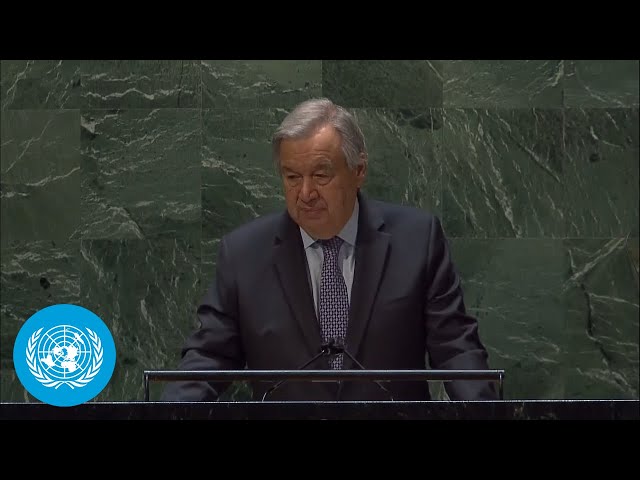
“The Global Compact reflects the commitment of the international community to make migration work for all – to make it a source of prosperity and solidarity, not a byword for inhumanity”, he stated.

Three years on, this task remains as urgent as ever.

The UN chief commended all who have helped migrants integrate into host countries, facilitated regular pathways, and advanced collaboration between countries of origin, transit and destination.

However, he underscored that “much more can and should be done”.

Inclusive societies

Mr. Guterres’ outlined report recommendations that encompassed four priorities, beginning with promoting inclusive societies and include migrants in COVID-19 response and recovery efforts.

Despite playing an “outsized heroic role” in frontline response and providing a “vital lifeline” for families with scarce resources through their remittances, migrants are often excluded from recovery measures and denied access to basic services.

Moreover, many experience growing stigmatization, racism, and xenophobia.

As women and child face higher risks of trafficking along with gender-based violence, abuse and exploitation, others are forcibly returned, “with insufficient regard to health risks, due process or procedural safeguards”, he said.

It is imperative that all governments better protect migrants’ human rights, break down barriers for access to essential services, expand migration pathways and suspend forced returns, he added.
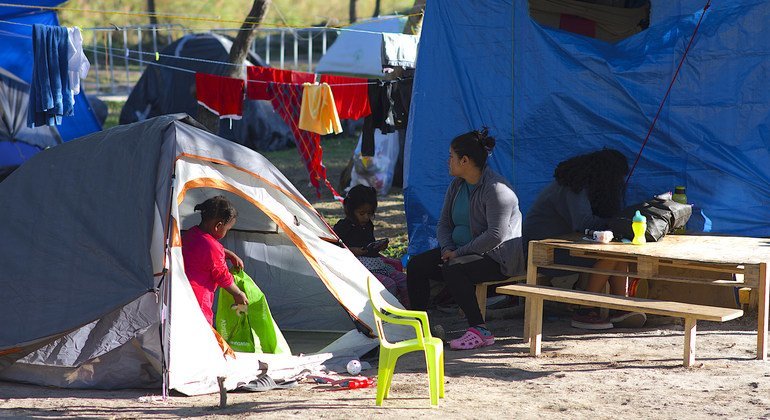
Asylum seekers, including children, at the Matamoros camp awaiting their US immigration hearings in Mexico.
UNICEF/César Amador
Asylum seekers, including children, at the Matamoros camp awaiting their US immigration hearings in Mexico.

Safe and regular migration

Although over 80 per cent of the world’s migrants move between countries in a safe and orderly fashion, unregulated migration continues to extract a terrible human cost.

“Large migration flows today are essentially managed by smugglers and human traffickers. This is totally unacceptable”, said Mr. Guterres, stressing the need for safe and regular migration.

He painted a grim picture of “these criminals” robbing people of their fundamental rights, stealing their dreams, and causing serious problems around the world, with “women and girls targeted again and again”.

Breaking the stranglehold

The only way to break the stranglehold of smugglers and traffickers is to establish pathways for regular migration in close cooperation between countries of origin and destination, according to the UN chief.

“We must better protect migrants in vulnerable situations, including those affected by disasters and the climate crisis…expand and diversify rights-based pathways for regular migration to address labour market shortages, and advance the Sustainable Development Goals (SDGs)”.

He said more needed to done “to ensure returns and readmissions are safe, dignified and in full accordance with obligations under international law.”

All governments must also work together to ensure their safe and sustainable reintegration into home communities, he added.

Eliminate ‘collective shame’

In the last seven years, nearly 50,000 migrant deaths have been recorded across the world, although the actual numbers are higher.

“Behind each number is a human being”, said the UN chief, outlining the priority of preventing loss of life and other tragedies during migration, and ending the exploitation of the vulnerable.

Calling their deaths “a source of collective shame”, the UN chief said it is “a humanitarian imperative and a moral and legal obligation” to eliminate smuggling and human trafficking.
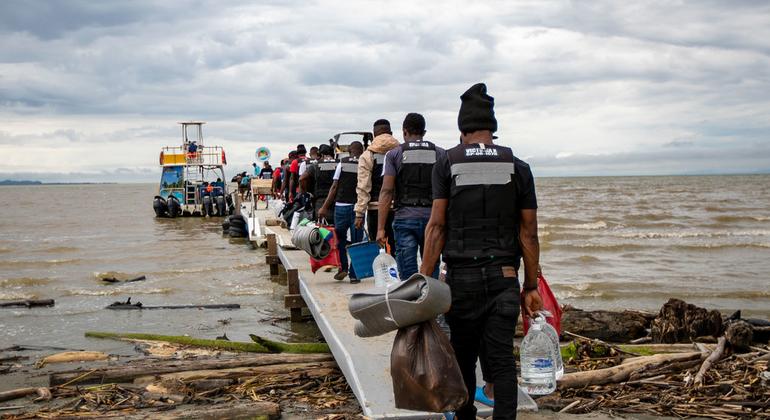
Migrants board a ship in the Gulf of Uraba, Colombia.
© UNICEF/Tomás Mendez
Migrants board a ship in the Gulf of Uraba, Colombia.

Collaboration, cooperation

His final priority focused on building capacity.

Describing “collaboration and cooperation” across all States as “the cornerstones” of the Global Compact, the Secretary-General drew attention to the UN Network for Migration, which has established a Capacity Building Mechanism – with a Migration Network Hub and Multi-Partner Trust Fund – to help achieve this.

Looking ahead

Mr. Guterres expressed hope that during the International Migration Review Forum IMRF – which will kick off tomorrow and run until Friday – his report should help prepare “tangible, ambitious and actionable pledges” for a “strong political outcome” that fosters “global solidarity towards migrants…and build[s] more resilient and inclusive societies.”

“Together – and only together – can we safeguard our common humanity and secure the rights and dignity of all.”

Far-reaching aspirations

Hosting the briefing, General Assembly Abdulla Shahid said the report would play a key role during the IMRF.

“As we anticipate the first review of the Global Compact, we must aspire to far reaching and ambitious outcomes”, he said, adding that the forum must be “a space to discuss common challenges, rectify failures, and explore avenues to strengthen partnerships between States and stakeholders”.

This requires international cooperation and the strengthening of human rights-based, gender-responsive, child-sensitive migration policies that prioritize the dignity of all people.

Call to States

Mr. Shahid called on Member States to take “concrete actions” to foster bilateral and regional cooperation…accelerate the implementation of the selected programmes in the Migration Multi-Partner Trust Fund and contribute to the dedicated funding window.

As “a whole-of-government and whole-of-society approach is vital” for the IMRF, he encouraged the participants to consult with their national counterparts in preparing national strategies and invite local stakeholders to join their delegations.

In view of the progress already made, he also called on Member States to maintain strong momentum going forward by “harnessing the power of multilateralism”, to achieve the Global Compact’s goals and address the needs of “all migrants and host-communities alike”.

Protecting our territorial sovereignty and national border security nowadays

21:28 |

 National border is sacred and inviolable; border management and protection are of paramount importance to our country’s territorial integrity and sovereignty. Thus, grasping and realising our Party and State’s viewpoints on border defence work represent a matter of urgency to the entire Party, Military, and people in general, the Border Guard Force (BGF) in particular for the Homeland protection in the new situation.

Border management and protection constitute a crucial part of the Homeland construction and defence under the Party’s absolute, direct leadership, the State’s focalised, uniform management, and especially the direct leadership, management, and command from the Central Military Commission (CMC) and the Ministry of National Defence (MND). That has been stipulated in the 12th Politburo’s Resolution 33-NQ/TW, dated September 28th, 2018 on the Strategy for National Border Protection.

According to Resolution 33-NQ/TW, in the new situation, the BGF as the core, specialised force in managing and defending national border has to perform comprehensive, complex missions. More specifically, it is tasked with “safeguarding national independence, sovereignty, unification, and border integrity, protecting the Party, the State, the People, and the socialist regime, maintaining peace, security, culture, law, and national majesty and symbol at the border and border gates, building a border of peace, friendship, stability, and cooperation, firmly defending national border, and making contributions to boosting socio-economic development associated with defence-security consolidation and diplomacy at the border and nationwide.” To fulfil those missions, the BGF should comprehensively, synchronously implement measures for national border management and protection. Emphasis should be placed on promoting all people’s synergy, closely combining armed measures with non-armed measures, aligning direct, on-the-spot protection with basic, long-term protection from afar, and settling all differences and disputes by peaceful means on the basis of international law and practices. It is necessary to be fully aware of the Party’s viewpoints on Vietnam’s partners and opponents during the border management and protection process, fight against the rigidity in the formulation of measures for settling specific situations at the border and sea, associate territorial sovereignty and national border security management and protection with “open door” and international integration policies, and build a border of peace, friendship, cooperation, and development with our neighbours.

During the process of national border management and protection, it is important to grasp and realise the goal of building a strong, efficient, and effective political system, a firm “posture of people’s hearts and minds,” and a solid national great unity block as the basis for defence-security consolidation and national border management and protection, making more investments in border residential clusters, fostering socio-economic development, improving the people’s life, effectively executing national target programmes on rapid, robust, and sustainable development, and combining socio-economic development with defence-security consolidation and diplomacy within border areas. Due attention should be paid to appointing cadres from border guard posts to district-level party committees within border districts, consolidating and constructing defensive zones within border provinces and municipalities, and building a firm posture of all-people border defence within the all-people national defence posture associated with the people’s security posture in border areas.

Members of the BGF, the Public Security Force, and the Militia and Self-Defence Force join hands in border protection (photo: bienphong.com.vn)

The building of a core, specialised force to manage and protect national border is a matter of principle to all countries around the world. Notably, the complex developments of the situation on a global and regional scale and the 4th industrial revolution are posing challenges and creating opportunities for national border management and protection. Therefore, according to Resolution 33-NQ/TW, it is vital to build a revolutionary, regular, elite, and gradually modern BGF; some of its components will move straight to modernity, with a high level of synergy, political zeal, professional competence, and a good command of law, foreign languages, and ethnic minority languages. The BGF should “have meals with, live with, work with, and speak same languages with ethnic minority groups,” protect the people, and defend the border. At the same time, significance should be attached to ensuring modern weapons and equipment for national border management and protection in any situation.

Currently, disputes over sovereignty, territories, sovereign rights, and jurisdiction, particularly in the East Sea between countries are increasingly complex and unpredictable. There have been new methods and artifices of violating our sovereignty, territory, and security along the border. Issues relating to border, territory, ethnicity, and religion are put at the forefront of hostile forces’ sabotage strategy. There is an increase in organised, armed, or cross-border crime. Meanwhile, non-traditional security challenges tend to be more complex. All those things are imposing more demanding, comprehensive requirements on border defence work. Grasping and executing the Party’s guidelines and the State’s laws and policies on border defence work, the BGF’s Party Committee and Command will focus on well implementing several fundamental tasks and measures as follows.

1. The BGF will continue thoroughly grasping the guidelines and policies set by the Party, the State, the CMC, and the MND on military-defence task and border defence work. It will proactively cooperate with other forces in better grasping, evaluating, and forecasting situations to give advice to the Party, the State, the CMC, and the MND on performing border defence work and building the all-people border defence and a firm posture of all-people border defence. Coordination will be maintained to implement the Vietnam Border Defence Law and other relevant legal documents. The BGF will advise our Party and State to concentrate resources on accomplishing constructions for border management and protection, search and rescue, and socio-economic development in border areas as well as work towards measures to fight against acts of changing our border status quo.

2. The BGF will comprehensively, synchronously implement measures for national border management and protection. Emphasis will be placed on maintaining coordination to well execute border-related legal documents and taking part in negotiations about overlapping border areas and the border between Vietnam and Cambodia. Consideration will be given to strictly maintaining combat readiness to defend national sovereignty over seas and islands, settle the consequences of natural disasters, and conduct search and rescue operations. The BGF will grasp the situation, opportunely detect, prevent, and foil all plots and artifices by the hostile and reactionary forces, and combat crime of various types, especially drug and human trafficking to guarantee security and order within border areas. At the same time, it will improve the effectiveness of border gate and immigration management in accordance with the 4th industrial revolution and the requirements set by international integration in the new situation.

3. The BGF will well implement our Party’s foreign policy of independence, self-reliance, multilateralisation and diversification of international relations, and active international integration. There will be a close combination of the Party’s diplomacy, the State’s diplomacy, military diplomacy, border defence diplomacy, and people-to-people diplomacy in border areas. The BGF will enhance and bring into play border defence friendship exchange programmes, and multiply twinning projects between localities and the peoples from two sides of the border. Due attention will be paid to executing coordination programmes between border guard forces of Vietnam, our neighbours, and relevant countries in order to build and cement strategic trust towards peace and stability in the region and the world. Besides, the BGF will promote cooperation with international organisations and other countries’ competent forces in search and rescue as well as in epidemic, free migration, and trans-national and cross-border crime prevention and combat.

4. The BGF will enhance the work of propagation and education to raise the people’s awareness of the Party’s guidelines, the State’s laws and policies, and relevant international agreements. Great value will be attached to taking part in building a strong, efficient, and effective political system, fostering socio-economic development associated with defence-security consolidation and national border protection, and strengthening the national great unity block as the basis for the construction of defensive zones within border provinces and municipalities. The BGF will promote the role of its cadres as members of party committees in border districts, communes, and villages. In addition, it will keep well implementing Prime Minister’s Directive 01/CT-TTg, dated January 9th, 2015 on “organising the movement of all people’s participation in protecting territorial sovereignty and national border security in the new situation.”

5. Importance will be attached to giving sound advice on building an extensive, synchronous all-people BGF and making it strong in terms of politics, ideology, morality, organisation, and personnel. Great weight will be added to bettering the effectiveness and efficiency of state management of national sovereignty and border security. The Project on “organising the BGF in the period of 2017-2021 and beyond” will be well executed. Last but not least, emphasis will be placed on providing the BGF with modern equipment, improving the BGF’s synergy, combat power, and task performance, and building a compact, strong, efficient, effective BGF as the basis for a modernised BGF in 2030 under the Resolution of the 13th National Party Congress.

Party's Inspection Commission clarifies violations in some bodies

21:38 |

 The Party Central Committee’s Inspection Commission convened its 12th meeting from March 2-4 under the chair of its head Tran Cam Tu.
At the meeting, members of the commission discussed and gave conclusions on a number of issues related to signs of violation seen in the Standing Board of the Party Committee of Binh Thuan province in the 2015-2020 tenure; the Standing Board of the Party Committee of the Military Medical University in the 2015-2020 and 2020-2025 tenures; and the Standing Board of the Party Committee of the Border Guard Command of Kien Giang province in the 2015-2020 and 2020-2025 tenures.

The commission found that the Standing Board of the Party Committee of Binh Thuan province in the 2015-2020 tenure violated the principle of democratic centralism and working rules, and showed lack of responsibility, loosened leadership and directions, supervision and monitoring, leading to the Party delegation to the provincial People’s Committee, the provincial People’s Committee and many other organisations and individuals violating the Party’s regulations and the State’s laws regarding land management and use during the implementation of a number of projects. Some officials and Party members, including key leaders of the province, have been prosecuted and put in temporary detention, it said.

Meanwhile, the commission concluded that the Standing Board of the Party Committee of the Military Medical University also violated the principle of democratic centralism and working rules, and showed lack of responsibility, loosened leadership and directions, supervision and monitoring, thus allowing a number of the university's officials and leaders to to seriously violating the Party regulations and State laws as well as the rules of the Central Military Commission and the Ministry of National Defence during the process of proposing and implementing their national-level scientific and technological tasks in researching and manufacturing COVID-19 test kits serving the pandemic prevention and control and the purchase of equipment and COVID-19 test kits from Viet A Technology JSC.
Similar violations were commited by the Standing Board of the Party Committee of the Border Guard Command of Kien Giang province, which prompted the provincial Border Guard Command and many officials and Party members, including key officials and commanders of its units to show degradation in political virtue, morality and lifestyle, and violate the Party regulations and State laws as well as the rules of the Central Military Commission and the Ministry of National Defence in personnel work, management and use of financial resources, assets and defence land, and construction, as well as in combating smuggling and trade fraud and in the fight against corruption and negative phenomena.

The above-mentioned violations have left serious consequences and great losses in the State’s capital and assets, causing public angers and nagatively impacting the prestige of the Party organisation. They are so serious that disciplinary measures need to be taken, the commission underlined.

It decided to give punishments to a number of officials and Party members, while considering a number of other important issues./.


Ukraine crisis shows the West hypocrisy

21:35 |


As the Russian invasion of Ukraine continues into a fourth day, an outpouring of support for Ukrainians has been witnessed across much of Europe, Australia, and the West in general.

The war has triggered swift condemnation by several countries, immediate sanctions by the United States and other countries targeting Russian banks, oil refineries, and military exports, and marathon emergency talks at the UN Security Council (UNSC).

On social media, the speed of such an international response – which includes the exclusion of Russia from some cultural events and treatment of it as a pariah in sports – has raised eyebrows at the lack of such a reaction to other conflicts across the world.

Media pundits, journalists, and political figures have been accused of double standards for using their outlets to not only commend Ukraine’s armed resistance to Russian troops, but also to underlying their horror at how such a conflict could happen to a “civilised” nation.

CBS News senior correspondent in Kyiv Charlie D’Agata said on Friday: “This isn’t a place, with all due respect, like Iraq or Afghanistan that has seen conflict raging for decades. This is a relatively civilised, relatively European – I have to choose those words carefully, too – city where you wouldn’t expect that, or hope that it’s going to happen.”

His comments were met with derision and anger on social media, with many pointing out how his statements contributed to the further dehumanisation of non-white, non-European people suffering under a conflict within mainstream media.

European politicians have also expressed support for open borders towards Ukrainian refugees, using terminology such as “intellectuals” and “European” – a far cry from the fear-mongering used by governments against migrants and refugees from Africa, the Middle East and Central Asia.

“Skin is a passport … epidermal citizenship,” one social media user said.

As hope dies, hypocrisy lives.

That equation, of sorts, came to mind as I watched with a depressing mixture of grief, sadness and dread Russia’s invasion of Ukraine occur in real time on TV.


Viet Nam extremely concerned over ongoing armed conflict in Ukraine

21:36 |


Viet Nam has been extremely concerned over the ongoing armed conflict in Ukraine, a sovereign member state of the Unitied Nations.

VN calls for dialogues to protect Ukrainan citizens - Ảnh 1.

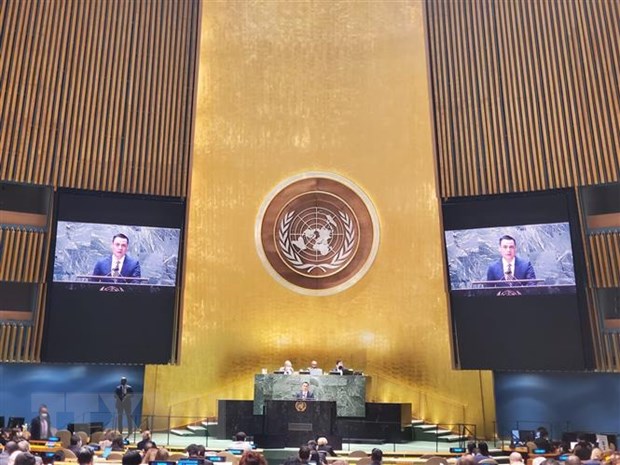
Ambassador Dang Hoang Giang, Head of the Permanent Delegation of Viet Nam to the United Nations delivers remarks at the United Nations General Assembly’s emergency session on Ukraine

Ambassador Dang Hoang Giang, Head of the Permanent Delegation of Viet Nam to the United Nations made the above statement at the United Nations General Assembly's recent emergency special session on Ukraine.

Dang said Viet Nam and other ASEAN member States issued a statement on this matter on February 26, 2022, emphasizing that it is imperative now to exercise utmost restraint and immediately cease the use of force to avoid further casualties and losses, especially those of civilians.

"We call on concerned parties to de-escalate tension, resume dialogue and negotiation through all channels, with a view to achieving long-term solutions that take into consideration the interests and concerns of all parties, in accordance with international law, in particular the respect for sovereignty and territorial integrity of states," stated Dang.

The Ambassador went on to say that "such a solution will put an end to the ongoing suffering and make major contribution to peace, security and development in Europe and the world at large."

In this regard, Viet Nam takes note of the meeting between the delegations of Ukraine and the Russian Federation and looks forward to continued engagement by relevant parties and early results from the negotiations.

At the same time, it is of critical importance to safeguard the safety, security of the people and indispensable civilian infrastructure, in line with international humanitarian law, said Dang.


International Women’s Day, 2022 Women are the Answer to Sustainable Development

21:22 |

 When countries improve their Global ranking, there is rejoicing within the community that progress has been made at last.. but has it and why does it matter ?

Unfortunately, upon careful analysis of the World Economic Forum predictions, the world will not reach gender parity until the year 2156 – date pushed back by another 36 years as a result of the pandemic. We can take comfort in the fact that the WEF prediction is based on a straight-line extrapolation of the trend over the past fifteen years into the future. What is perhaps of greater value is the collection and aggregation of the range of indices on gender equality from around the world, from education to wages, health and politics. On the latter field, the news have been disappointing. While some countries like Iceland have been closing the gap, others like Japan lag way behind.

Yet, progress has come from unexpected quarters – unexpected because the ingrained stereotype would have it that the Arab world would not allow female presence in politics. In 2019, the UAE’s Highness Sheikh Khalifa bin Zayed Al Nahyan, issued Presidential Resolution No. (1) ordering equal representation of Emirati women in the Federal National Council. This decision saw female representation jumped from 23% in 2019 to 50% today.

How to handle this disparity? Is it time for quota? Also why do we need female representation at all? This is a question that the developing world no longer asks especially when it comes to issues like food security, climate change amongst other issues. At COP 26, the link has finally been made between gender equality and climate change.

It has been said time and time again that the effects of climate change put women at increased risk of hunger, food insecurity and violence. This threatens women’s income, health and way of life. Women feed their families and are the prime caregiver especially in developing countries. Entire households depend on them to provide food, fuel and water which is expected to become scarcer as temperature rise.

Women’s ability to financially provide for themselves and their families will also be affected and they make up 70% of the 1.3 billion people living in poverty. In Southern Asia and sub-Saharan Africa, over 60 per cent of women are employed in agriculture, often in labour-intensive activities, unpaid or poorly remunerated. In sub-Saharan Africa, women comprise 30 to 80 per cent of the agricultural labour force, and produce about 4-25% less in the value of agricultural produce per unit of cultivated land than their male counterparts. The gender gap in agricultural productivity exists because women often have unequal access to crucial agricultural inputs such land, labour, knowledge, fertilizer and improved seeds. This has implications for the income, health and nutrition of both women and children.

Also 70% of the women work in the agricultural sector which stands to be devastated from increasingly unreliable weather and increased intensity and regularity of extreme weather events and by way of example, the island of Madagascar has witnessed four large and intense cyclones since early 2022.

The chances of women escaping the situation is bleak. As the effects of climate change intensify, the opportunities for women to gain the resources, skills and education may fall out of reach. It was expected that in 2021 alone, climate-related events would prevent at least 4 million girls in lower-income countries from completing their education. If current trends continue, that number will reach 12.5 million by 2025.

However, tackling climate change to resolve these issues will not be impossible if women are not empowered to be included in the discussions and, more importantly, the decisions. As key contributors to communities, as carers and activists, as well as in local food systems and in the home, women are in a unique position to drive longer-term climate resilience.

Yet, women continue to be marginalised. Women make up only 19% of IMF and World Bank boards and less than 30% of national parliamentarians. The gender pay gap also continues to be an issue. Worldwide, women share 35% of the global income, an increase of only 5% since 1990. The responsibility and opportunity to tackle gender inequality and climate change lie in the hands of both governments and the private sector.

Funds pledged at COP26 will go towards local communities and grassroots women’s groups in Asia Pacific to challenge gender inequalities, and to help adapt to the impacts of climate change. Given the urgency and magnitude of the global challenges that face the world, we must do better at harnessing the leadership, ability and aptitude of women, recognizing their unpaid care and domestic work, and ensuring gender-responsive economic policies for job creation, poverty reduction and sustainable, inclusive growth.

All institutions have their role to play. Private companies can tackle issues both externally and internally. Internally, they can work on the changes of the gender split in board rooms, correcting the gender pay gap, working to end discrimination, and creating a work culture that empowers women.

Externally, companies can invest in projects that directly support the development of women as well as form partnerships with charities and communities to give girls and women the education, skills and opportunities they need to succeed.

The more we talk about these issues, the greater the awareness there will be.

Greater awareness means there is more we can do, together, to address these pertinent issues and no matter how small the actions, they can build momentum until they have a positive impact for women and girls around the world because empowering women is no longer just an ethical issue. It is now an economic one. Economic gender parity ensure gains not only for economies of both developed countries and developing countries.

Vietnam strives to become one of the world’s leading agricultural countries by 2050

21:51 |


This is one of the goals set in the new strategy on agricultural and rural development in the period 2021 – 2030, vision 2050, approved by Decision 150/QĐ-TTg on 28th January.

Policy reform aims to promote socio-economic development in ethnic minority-inhabited, mountainous areas

21:35 |

 Deputy Prime Minister Pham Binh Minh has signed a decision issuing an action framework on mechanism and policy reform to support the national target program on socio-economic development in ethnic minority-inhabited and mountainous areas in the 2021-2030 period.

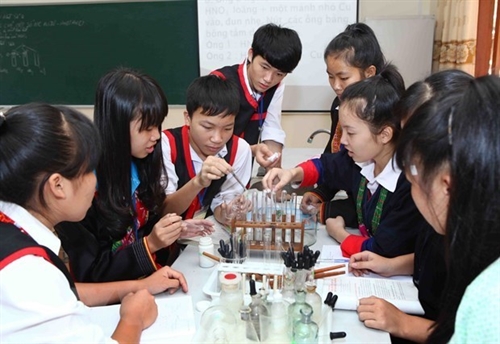
Students at a boarding school for ethnic minority people__Photo: VNA
Under the scheme, as part of the efforts to improve the human development indicator, the Ministry of Education and Training this month will form a mechanism to implement the second phase of a project to strengthen the teaching of the Vietnamese language among pre-school children and primary pupils in the areas.

The ministry will also complete a draft circular on the organization and operation of boarding schools for ethnic minority students and a similar circular for semi-boarding schools for ethnic minority students.

Also in March, the Ministry of Labor, Invalids and Social Affairs will issue a circular guiding the provision of career and employment consultations and startup support to students at vocational training facilities.
Meanwhile, the Government will release a resolution deciding the monthly allowances to medical staff and midwives in ethnic minority-inhabited and mountainous villages and hamlets.
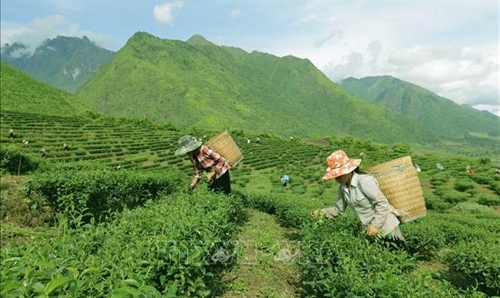
Workers at Tam Duong tea farm in Moc Chau__Photo: VNA
In order to strengthen the governance and management over national target programs, in March, the Government plans to issue a decree on the mechanism for the management and implementation of the programs, including the designing of plans for the programs with the engagement of the local communities at the communal level, and general regulations on activities to support production development, and typical rules in conducting small-scale infrastructure projects.

At the same time, the Government Committee for Ethnic Minority Affairs will make public a circular on the process of supervision and evaluation for the national target program on socio-economic development in ethnic minority-inhabited and mountainous areas in the 2021-2030 period, focusing on gender equality indicators.
Previous Article Next Article
Trang chủ
Được tạo bởi Blogger.

Viet Nam Human Rights

Popular Posts

  • The chaging trend of religions in Vietnam today
    Religion is a part of the spiritual life in society, this phenomenon of the superstructure has been strongly changed with economic - social...
  • Vietnam & the UPR
    Vietnam has just done well for the second cycle of Universal Periodical Review (UPR) in Geneva, Switzerland. So, what’s the UPR? an...
  • Vietnam and Human Rights progress
    Representatives from foreign countries congratulate Viet Nam on its election to the Human Rights Council for the first time on November ...
  • 2014: The promising year
                                                         A street flowers vendor in Hanoi Another new spring has come to Vietnam, bring...
  • Some thoughts due to Thai political crisis
                                                  Thai people in Shutdown Bangkok protests Not until this crisis, we have realized the ne...
  • Do not let preferential treatments fall into obscurity
    If nothing changes, there will be a preferential credit program with hundreds of thousands billion of capital for agriculture and r...
  • Beware of Trinh Hoi and VOICE - A branch of terrorist Viettan
    Recently, several anti-governmental individuals have established series of illegal groups and organizations in the name of civil soci...
  • Warnings: Child sexual abuse is on the rise in Vietnam - Join to stop!
    Child sexual abuse has been on the increase in Vietnam in recent years according to the Ministry of Labour, Invalids and Social Affairs....

Blog Archive

  • ►  2014 ( 272 )
    • ►  tháng 2 ( 26 )
    • ►  tháng 3 ( 26 )
    • ►  tháng 4 ( 25 )
    • ►  tháng 5 ( 24 )
    • ►  tháng 6 ( 24 )
    • ►  tháng 7 ( 26 )
    • ►  tháng 8 ( 25 )
    • ►  tháng 9 ( 25 )
    • ►  tháng 10 ( 23 )
    • ►  tháng 11 ( 24 )
    • ►  tháng 12 ( 24 )
  • ►  2015 ( 394 )
    • ►  tháng 1 ( 24 )
    • ►  tháng 2 ( 24 )
    • ►  tháng 3 ( 24 )
    • ►  tháng 4 ( 36 )
    • ►  tháng 5 ( 36 )
    • ►  tháng 6 ( 36 )
    • ►  tháng 7 ( 35 )
    • ►  tháng 8 ( 36 )
    • ►  tháng 9 ( 35 )
    • ►  tháng 10 ( 37 )
    • ►  tháng 11 ( 35 )
    • ►  tháng 12 ( 36 )
  • ►  2016 ( 423 )
    • ►  tháng 1 ( 36 )
    • ►  tháng 2 ( 37 )
    • ►  tháng 3 ( 36 )
    • ►  tháng 4 ( 36 )
    • ►  tháng 5 ( 36 )
    • ►  tháng 6 ( 34 )
    • ►  tháng 7 ( 36 )
    • ►  tháng 8 ( 34 )
    • ►  tháng 9 ( 35 )
    • ►  tháng 10 ( 34 )
    • ►  tháng 11 ( 35 )
    • ►  tháng 12 ( 34 )
  • ►  2017 ( 528 )
    • ►  tháng 1 ( 35 )
    • ►  tháng 2 ( 34 )
    • ►  tháng 3 ( 35 )
    • ►  tháng 4 ( 49 )
    • ►  tháng 5 ( 48 )
    • ►  tháng 6 ( 43 )
    • ►  tháng 7 ( 48 )
    • ►  tháng 8 ( 46 )
    • ►  tháng 9 ( 48 )
    • ►  tháng 10 ( 49 )
    • ►  tháng 11 ( 46 )
    • ►  tháng 12 ( 47 )
  • ►  2018 ( 562 )
    • ►  tháng 1 ( 45 )
    • ►  tháng 2 ( 41 )
    • ►  tháng 3 ( 45 )
    • ►  tháng 4 ( 46 )
    • ►  tháng 5 ( 45 )
    • ►  tháng 6 ( 48 )
    • ►  tháng 7 ( 49 )
    • ►  tháng 8 ( 50 )
    • ►  tháng 9 ( 50 )
    • ►  tháng 10 ( 47 )
    • ►  tháng 11 ( 47 )
    • ►  tháng 12 ( 49 )
  • ►  2019 ( 549 )
    • ►  tháng 1 ( 48 )
    • ►  tháng 2 ( 47 )
    • ►  tháng 3 ( 47 )
    • ►  tháng 4 ( 44 )
    • ►  tháng 5 ( 46 )
    • ►  tháng 6 ( 46 )
    • ►  tháng 7 ( 46 )
    • ►  tháng 8 ( 47 )
    • ►  tháng 9 ( 47 )
    • ►  tháng 10 ( 43 )
    • ►  tháng 11 ( 42 )
    • ►  tháng 12 ( 46 )
  • ►  2020 ( 531 )
    • ►  tháng 1 ( 44 )
    • ►  tháng 2 ( 43 )
    • ►  tháng 3 ( 45 )
    • ►  tháng 4 ( 43 )
    • ►  tháng 5 ( 47 )
    • ►  tháng 6 ( 43 )
    • ►  tháng 7 ( 49 )
    • ►  tháng 8 ( 42 )
    • ►  tháng 9 ( 41 )
    • ►  tháng 10 ( 44 )
    • ►  tháng 11 ( 42 )
    • ►  tháng 12 ( 48 )
  • ►  2021 ( 522 )
    • ►  tháng 1 ( 45 )
    • ►  tháng 2 ( 43 )
    • ►  tháng 3 ( 39 )
    • ►  tháng 4 ( 40 )
    • ►  tháng 5 ( 41 )
    • ►  tháng 6 ( 43 )
    • ►  tháng 7 ( 43 )
    • ►  tháng 8 ( 48 )
    • ►  tháng 9 ( 39 )
    • ►  tháng 10 ( 51 )
    • ►  tháng 11 ( 43 )
    • ►  tháng 12 ( 47 )
  • ▼  2022 ( 418 )
    • ►  tháng 1 ( 42 )
    • ►  tháng 2 ( 46 )
    • ►  tháng 3 ( 46 )
    • ►  tháng 4 ( 44 )
    • ►  tháng 5 ( 43 )
    • ►  tháng 6 ( 41 )
    • ►  tháng 7 ( 46 )
    • ►  tháng 8 ( 30 )
    • ►  tháng 9 ( 41 )
    • ▼  tháng 10 ( 39 )
      • ASEAN’s commitment to enhance development cooperation
      • 50 outstanding young people with disabilities hono...
      • Vietnam Red Cross sends aid to flood victims
      • Ceremony for Action Month for Elderly
      • More efforts in corruption fight
      • Vietnam Marine Strategy: a long stride in realizin...
      • Vietnam’s human rights achievements undeniable
      • Foreign expert optimistic about Vietnam’s economic...
      • Vietnam has good track record against sex selectio...
      • Rescue Vietnamese lured into illegal work in forei...
      • Religious practices never so favourable
      • Việt Nam affirms to promote rule of law at nation...
      • Foreign journalist highlights Vietnam's efforts to...
      • The absurdity of the U.S annual human rights reports
      • Viet Nam gains international trust thanks to respo...
      • Vietnam’s human rights achievements undeniable
      • Vietnam elected to UN Human Rights Council
      • How Digital Can Drive a Green Recovery
      • World Food Day 2022
      • Strengthening response to cyberinformation securit...
      • The risk of conflict resurgence in Kosovo
      • Human rights to be brought into national education
      • Vietnam commits to advancing women’s progress
      • Việt Nam pledges to continue ensuring human rights
      • Vietnam commits to supporting foreign NGOs
      • Vietnam enhances intellectual property enforcement...
      • Vietnam supports visions to respond to global chal...
      • Information transparency a foundation for trust bu...
      • U.S. Political Divides on Demographic Issues
      • Press freedom must be within the legal framework
      • Vietnam achieved significant progress in anti-dome...
      • Việt Nam promotes basic principles of internationa...
      • Việt Nam’s reform and green development policy att...
      • A new arms race among major powers
      • Viet Nam is fastest growing digital economy in Sou...
      • Vietnam’s political, business environment stable
      • Vietnam emphasises consistent stance on Palestine ...
      • Policy supporting people affected by COVID-19 revi...
      • Facebooker sentenced to two years in jail for abus...

Total Views

INFORMATION

Template by: Me
Customize and fix by: Me - Me
Email: 123@gmail.com