Gov’t officials congratulate Cao Dai followers on biggest festival

20:38 |
Nguyen Tien Trong (second from left), vice chairman of the Government’s Committee for Religious Affairs meets with representatives of the Cao Dai Temple in HCM City on September 20

Officials from the Government’s Committee for Religious Affairs on September 20 visited and offered congratulations to representatives of the Cao Dai Temple (Tay Ninh Holy See) in Ho Chi Minh City on the occasion of the religion’s biggest festival - “Hoi Yen Dieu Tri Cung”.

Nguyen Tien Trong, vice chairman of the committee, expressed his sympathies for the Cao Dai Temple’s representative board over the difficulties in organising religious activities amid the complex COVID-19 situation in HCM City.

He pledged to create favourable conditions for the representative board, dignitaries, and followers of Caodaism to practice their religion and carry out disease prevention measures.

The official appreciated the board’s encouragement to their dignitaries and followers to comply with the anti-pandemic rules issued by the Government, the Health Ministry, and the HCM City administration.

Trong also applauded their active efforts to support the poor and those hit hard by the pandemic and assist frontline forces, voicing his hope that the representative board, dignitaries, and followers of Caodaism will continue engaging in charitable activities and supporting the COVID-19 fight in HCM City.

Thanking leaders of the committee for their attention, Professor Thuong Sang Thanh, head of the Cao Dai Temple’s representative board in HCM City, said despite complex developments of COVID-19, Cao Dai followers still have a stable life and have seriously adhered to anti-pandemic regulations.

They have also stayed united to help pandemic-hit people, encourage their descendants to take part in voluntary programmes to assist frontline forces, and support other followers who have contracted the disease, he added.

“Hoi Yen Dieu Tri Cung” is the biggest festival of Cao Dai followers in a year. It is a great religious banquet for the Great Mother and nine female immortals of the Dieu Tri Palace (Jasper Pond Palace) held annually on the 15th day of the 8th lunar month – the Mid-Autumn Festival, which falls on September 21 this year. Followers believe the banquet implies a practice that enables them to achieve their goal of liberating themselves from the cycle of birth and death. They pray for good weather, national peace, and prosperity on this occasion./.

Foreign investors affirm confidence in Vietnam's economic recovery in post-COVID-19

22:00 |

 The fourth outbreak of the COVID-19 pandemic starting from late April has had more negative impacts on daily life as well as socio-economic development than the previous waves in the country. However, Vietnam attracted USD 14 billion in foreign direct investment (FDI) in the first eight months of this year, only two percent lower than the same period last year, showing foreign investors’ confidence in the country’s economic scenario in the mid-and long terms.

 
Viet Nam News reporters Vu Hoa and Hoang Anh talk with Choi Joo Ho, President of Samsung Vietnam; Mohammad Mudasser, Director, Advisory Services, PwC Vietnam; and Nguyen Thi Ngoc Hue, Corporate Communications & External Affairs General Manager of AEON Vietnam about investors’ confidence in Vietnam’s investment environment and its fight against the pandemic.
 
How has the fourth outbreak of the coronavirus in Vietnam and the ongoing social distancing measures including restrictions on mobility and disrupted supply chains affected your firm's operations?

Choi Joo Ho, President of Samsung Vietnam

Choi Joo Ho, President of Samsung Vietnam
When the 4th wave of the COVID-19 pandemic hit Bac Ninh and Bac Giang, in May and June, Samsung had difficulties in production, but with the comprehensive support of Prime Minister Pham Minh Chinh, the Government, and local authorities, as well as effective anti-pandemic measures, Samsung has overcome these obstacles.
 
However, recently, due to the COVID-19 pandemic situation in HCM City, our production and supply of TVs and home appliances encountered difficulties. If this situation continues, which is expected to cause major problems for exports, we hope that economic activities will be restored soon so that Samsung factories and our suppliers can return to normal operation.
 
Despite the COVID-19 pandemic, Samsung has successfully achieved its export target in the first six months of the year. If Samsung's home appliance factory in HCM City soon reopens, we are expected to exceed this year's export target.

Mohammad Mudasser, Director, Advisory Services, PwC Vietnam

Mohammad Mudasser, Director, Advisory Services, PwC Vietnam
 
The impact of the fourth outbreak and the ongoing social distancing measures vary depending on the industry you operate in. Like all others in the professional services sector, PwC Vietnam has operated fully on a work-from-home basis in accordance with the Vietnamese Government’s and health authorities’ guidance.
 
In my opinion, business-as-usual has been redefined and physical presence at work is no longer a “must-have”. Embracing Digitalization is key in how professional services firms today serve and respond to clients’ needs. From the daily virtual client meetings to the use of AI/analytics for workforce predictions.
 
Whilst these are challenging times for all businesses in Vietnam, the outbreak also presents an opportunity for organizations to evaluate their capabilities based on the fast-changing market conditions and client behaviors. That’s why it is encouraging to see that many companies are looking “inwards” for business improvement initiatives (eg. restructuring, cash and cost management, employee wellbeing and embedding higher levels of professionalization of the business).

Nguyen Thi Ngoc Hue, Corporate Communications & External Affairs General Manager of AEON Vietnam 

Nguyen Thi Ngoc Hue, Corporate Communications & External Affairs General Manager of AEON Vietnam 
 
The outbreak has resulted in negative and challenging impacts on the socio-economic situation and changed customers’ shopping behavior. Those are difficulties that all businesses, including AEON Vietnam, had to cope with. For example, we have experienced a shortage of workers on daily operations due to employees infected with COVID-19 or living in quarantine zones and a shortage of shippers. 
 
Costs have also been on the rise due to pandemic prevention activities such as regular store disinfection and COVID-19 tests. Meanwhile, during some peak periods AEON Vietnam has reduced its profit margin to support suppliers with the cost burden and at the same time keep prices stable for customers.
 
AEON Vietnam's policy not to charge/reduce rental costs for tenants in shopping malls partly affects the revenue composition of the whole company. 
 
Our shippers experienced difficulty in inter-district delivery due to inconsistent procedures at checkpoints in the green zones in the city even though the employees or the suppliers present the staff IDs or certificates. 
 
Do you see the Vietnamese Government's effort to contain the spread of the virus as too restrictive or appropriate? Please elaborate why?
 
Choi Joo Ho
 
We completely agree with the Vietnamese Government's policy of "effective pandemic prevention" and "economic growth" at the same time.
 
Strict prevention measures to control the pandemic are inevitable. However, when strong pandemic prevention measures continue for a long time, it will cause vital economic losses. I think that both pursuing "effective pandemic prevention" and "economic growth" must constantly examine that balance.
 
Especially, after the pandemic situations in Bac Giang and Bac Ninh were controlled, I completely believe in the pandemic prevention and control solutions from the Government and Prime Minister Chinh. I have faith that the pandemic situation, including the outbreak in HCM City, will soon be stabilized. We will do our best to contribute to the rapid economic recovery of Vietnam.
 
Mohammad Mudasser
 
Closing the border and containing the spread at the border proved to be the most effective measure made by the Vietnamese Government when the first outbreak started in early 2020.
 
With the emergence of new variants, efforts to contain the spread have become much more challenging. Thus it is important for the government to focus and continue to implement actionable initiatives on how to adapt and live with COVID-19 (e.g. COVID-19 vaccine fund) while promoting socio-economic development (eg. Resolution 68/NQ-CP supporting employees and employers).
 
Nguyen Thi Ngoc Hue
 
Facing many difficulties caused by the pandemic, efforts and measures of the government are unprecedented. Because the socio-economic conditions and the pandemic situations in Vietnam have their own characteristics that cannot be compared with those in other countries, the government and authorities had adjusted the countermeasures in a flexible and timely manner. 
 
We understand the Vietnamese government's countermeasures are necessary to fight the pandemic. Despite the difficulties, AEON always supports and stands along with the Vietnamese government and the Vietnamese people. We have seen that the government also received great support from the public.
 
Through AEON retail operations, we always strive to stabilize the supply and selling price of essential goods for people; supporting suppliers in Green Lane registration to remove difficulties in good transportation and distribution. 
 
What recommendations would you make to the Vietnamese Government on how to fight the virus while mitigating the disruption to the country's supply chain? What does Vietnam need to do to attract more foreign investors in the current context, thereby creating momentum for economic recovery in the post-COVID period?
 
Choi Joo Ho
 
Maintaining the global supply network of industrial parks is extremely important for businesses operating manufacturing plants, so we hope that the Government can share the problem with us. In any circumstances, there should be a mechanism to ensure "uninterrupted production". That is, we would like to suggest that even in difficult circumstances, the production lines of factories will not stop working, still operate according to the standard guidelines and predetermined route.
 
We know that recently, the four provinces of Bac Ninh, Thai Nguyen, Bac Giang and Vinh Phuc where global IT businesses are mainly involved in the supply chain, will soon sign a Memorandum of Understanding to build an ecosystem that supports businesses. The main content is to develop standard principles related to the prevention of the COVID-19 pandemic, to facilitate the movement of people and goods, as well as policies to minimize damage caused by factory closures without any notice in advance.
 
If this Memorandum of Understanding is signed and implemented according to the content, even if unexpected situations like COVID-19 occur, businesses in the four provinces can still produce without interruption.
 
Mohammad Mudasser
 
While the government has issued different support packages, accessibility to these support has not been easy despite 86 percent of Vietnamese enterprises - in a recent Vietnam Chamber of Commerce and Industry (VCCI) survey - stating that the relief policies are useful for their businesses and operations.   
 
To ensure prompt implementation, previously issued government initiatives, such as delay in payments of tax and interest, reduction in interest rates, other subsidies, etc. need to be constantly communicated to relevant stakeholders (e.g. banks, state tax offices, etc.). With small-and-medium enterprises (SMEs) making up over 90 percent of total enterprises in the country, support packages SMEs in specific industries will also help kick-start the recovery of some essential supply chains.
In order for Vietnam to achieve its goal of safely co-existing with COVID-19, the government needs to expedite the sourcing of vaccines through different channels (e.g. via COVID-19 fund under Decision Dec779/QĐ-TTg, COVAX). Concurrent to hastening the vaccination drives, social vigilance and strict enforcement of existing medical protocols such as 5K is needed to minimize further community outbreaks.
 
Nguyen Thi Ngoc Hue
 
In order to join hands with the government in economic recovery and to contribute to the dual goals of fighting the virus and socio-economic development, our recommendations are as follows. 
 
We recommend full vaccination for workers in the retail sector as they are among the most vulnerable groups during the pandemic. 
 
We support the implementation of vaccine passports, shorten quarantine time and simplified procedures for foreign experts entering Vietnam. More autonomy should be given to businesses in their own virus countermeasures when infections were detected and to decide whether they should continue or stop business operations. 
 
We also support capital support for small-and-medium-sized enterprises in the short and long term and the implementation of cashless payment.
We urge government agencies to streamline and simplify customs and importing procedures to speed up the import/export process, especially once the virus has been put under control to meet market demand. 
 
What does Vietnam need to do to attract more foreign investors in the current context, thereby creating momentum for economic recovery in the post-COVID period?
 
Choi Joo Ho
 
Although the COVID-19 pandemic is causing negative impacts, in the long term Vietnam is still an attractive investment destination for foreign investors.
 
In particular, the Prime Minister approved a new strategy (No 105) and redirected pandemic prevention, which is good news for foreign investors.
In the future, if Vietnam continues to implement effective anti-pandemic measures, and at the same time strengthens and creates favorable conditions for the recovery, maintenance, development of production, business and circulation of goods in a smooth way, overcoming supply chain disruptions, it is expected to continue to attract foreign investors to Vietnam.
 
Mohammad Mudasser
 
FDI disbursement for August 2021 was two percent higher than August 2020. This shows that overall sentiment is still buoyant for the Vietnam story. Vietnam needs to continue to showcase that the country has effective management regarding the balance between economic recovery and disease control across state, city and municipality levels. 
 
Although incentive schemes to attract foreign capital investment are valuable, investors are also looking to see the results of Vietnam's effort in preserving social welfare while reviving the economy. This phased approach must be backed by clear government guidance and strict enforcement mechanisms.

U.S. calculations in North Korean nuclear issue

21:57 |

 After 30 years’ implementation of sanctions, threat or use of force, and dialogue at many levels, the North Korean nuclear issue is not only resolved but also becomes more complex. President Joe Biden administration is still very careful to approach this issue.

North Korea’s moves

Soon after Joe Biden had officially become the next president of the United States, North Korea launched a new type of tactical guided weapon in March 2021. This move is not surprising because this scenario usually unfolds whenever a new government is formed in the U.S. For example, nearly three months after President Barack Obama had taken office, in April 2009, North Korea fired a long-range missile. This country also carried out a nuclear test six weeks later. Next, in February 2017, Pyongyang welcomed President Donald Trump by launching a medium-range ballistic missile while he was having a wonderful dinner with Japanese Prime Minister Shinzo Abe at Mar-a-Lago, Florida. North Korea’s leader Kim Jong-un decided to play an old game at this time to continue to send a strong message to U.S.’s newly-elected president, who Pyongyang certainly felt a little disappointed when he had not prioritised resolution of North Korean nuclear issue during his election campaign. Additionally, the personal relationship between President Joe Biden and leader Kim Jong Un is not good at all when both have used bad words to describe each other. The tactic for mounting tension in Korean Peninsula to draw the attention of the new administration in Washington is no longer new but it may seem the most feasible choice in the context of Joe Biden’s neglect of the North Korean nuclear issue. The restart of a cycle of psychological warfare through new military threats means that U.S.-North Korea “honeymoon” and the noisy summits with former President Donald Trump are over. It is time for North Korea to return to the familiar old rhetoric of demonstrating it progress in weapon development with the aim of inducing Joe Biden to use diplomatic tools to control the fury of Pyongyang. Consequently, to some extent, the introduction of new missiles through familiar ways at Joe Biden’s vital moments can be seen as a positive signal that North Korea is willing to resume dialogue.

Leader Kim Jong-un called the United States the biggest enemy at the 8th Congress of the Workers’ Party held in January 2021, and this nature and policy remain unchanged, whoever is in power. North Korean leader, however, still appreciates the agreement reached at the 2018 U.S.-North Korea summit and considers this agreement foundation for future negotiations about the relationships between U.S. and North Korea. Although Pyongyang continues to pursue strengthening of military power, it does not completely slam the door on dialogue with Washington. This is a realistic thinking because North Korea really wants U.S. to ease sanctions, which have suffocated its economy for decades.

According to latest data of the Bank of Korea (BOK), North Korea’s economy is severely affected by sanctions over its nuclear, missile programs, the Covid-19 pandemic, and bad weather. In 2020, the country with a total population of over 25 million suffered from the worst economic recession since 1997 when its gross domestic product (GDP) decreased 6.5 percent. The North Korean leader’s call for officials to “wage another, more difficult Arduous March,” a term used by North Korea officials to refer to the country’s struggle during the 1990s famine, aims to motivate people. Nevertheless, the truly effective solution to present challenges is nothing except for reducing pressure from sanctions to create favourable conditions for economic development. The only way to attain this goal is negotiation with Washington.

It must be acknowledged that even when tensions hit a peak, Washington has never given up dialogue with Pyongyang. As an experienced politician, President Joe Biden, who was elected to the U.S. Senate at the age of 29, may continue to pursue this approach. Soon after becoming the president of the United States, Joe Biden affirmed that diplomatic channels remain open for Pyongyang. However, the difficult question is that none of the parties wishes to act first due to lack of strategic trust.

U.S.’s calculations

The relationship between Washington and Pyongyang has never been simple as there are considerable suspicion and mistrust between them. Despite a difficult start during Donald Trump’s presidency, the two sides made surprise moves with summits which captured global attention. However, the openness of U.S. leader did not make any further advances in the relationship between the two former foes.

According to analysts, being surrounded by major powers makes North Korea believe that progress in nuclear weapons and missile technology is crucial for safeguarding the country and the regime. The tragic ending of Libyan leader Muammar Gaddafi after abandoning weapons of mass destruction in 2003 was certainly an expensive lesson for North Korea. Consequently, it is extremely difficult for North Korea to give up its nuclear program. The biggest question for President Joe Biden now is to pursue dialogue or confrontation because it seems that both approaches have failed to control Pyongyang’s nuclear ambitions.

Joe Biden, who used to be President Barack Obama’s vice president, is believed to carry on his predecessor’s policy of strategic patience on North Korea. Accordingly, the U.S. advocates waiting for North Korea to voluntarily give up its nuclear program under the pressure of economic sanctions. Nevertheless, some people claim that Joe Biden will adopt another approach since today’s situation has changed completely. The newly elected president has not proclaimed his policy on North Korea so far. Recently, at their first summit held in Washington on 21 May 2021, President Joe Biden and President Moon Jae-in declared that they would adopt a more practical approach with some adjustments aimed to create openness and opportunities for dialogue with North Korea. There is little information about how Joe Biden will deal with North Korea’s nuclear issue. However, it is estimated that the issue will be addressed according to the “Goldilocks Principle.” It means that a middle path must be worked out to avoid Donald Trump’s “art of the deal” and Barack Obama’s “strategic patience.”

The United State during Joe Biden’s presidency is believed to return to traditional foreign policy, which is completely different from Donald Trump’s highly personalised diplomacy. Biden is likely to adopt the bottom-up approach instead of his predecessor’s top-down style. Accordingly, negotiations will be conducted from working groups, senior officials to summits. This approach may take time to make major breakthroughs in U.S.-North Korea relations but will allow the two parties to make appropriate adjustments once situations occur, ensuring that everything is kept under control. This approach suits expectations of Joe Biden administration. They do not wish to see mounting tensions, at least in the early days of Biden’s presidency.

In his first interview, U.S. Secretary of State Antony Blinken raised the possibility of implementing a “double dealing” policy on North Korea. It means that Washington will impose further sanction on North Korea, but it will seek to engage this country. This message at least lessens concern that Joe Biden administration will only take tough measures, which potentially leads to strategic calculations. In fact, North Korean leader Kim Jong-un tends to accept negotiations in favour of national interests when he is determined to pursue the principle of simultaneous actions, commitment for commitment, action for action, and goodwill for goodwill. Consequently, according to observers, if concessions can be made at the right moments, especially those relating to the lifting of economic sanctions on Pyongyang, a breakthrough is completely possible.

Mapping out a route to complete denuclearisation of North Korean Peninsula while ensuring mutual respect and immutable principles of each party is a daunting task for Joe Biden administration. However, North Korea is a problem that cannot be ignored. The search for a suitable solution to this flash point remains one of the most important missions of the United States. If risks of North Korea’s nuclear and missile programs are not removed at once, at least the U.S. can have some mechanisms to prevent them from getting worst. This prospect will easily come true if Washington works closely with its allies in the region such as South Korea and Japan. Omitting friends with shared interests through unilateral policies like Donald Trump had done during his presidency neither served to promote trust nor brought about any considerable advances in the resolution of North Korea’s nuclear issue.

As War Keeps Poisoning Humanity, Organizing Continues to Be the Antidote

15:49 |

 Last weekend, U.S. corporate media continued a 20-year repetition compulsion to evade the central role of the USA in causing vast carnage and misery due to the so-called War on Terror. But millions of Americans fervently oppose the military-industrial complex and its extremely immoral nonstop warfare.

CodePink and Massachusetts Peace Action hosted a national webinar to mark the 20th anniversary of 9/11 — the day before Sunday’s launch of the Cut the Pentagon campaign — and the resulting video includes more than 20 speakers who directly challenged the lethal orthodoxy of the warfare state. As part of the mix, here’s the gist of what I had to say:

When we hear all the media coverage and retrospectives, we rarely hear — and certainly almost never in the mass media hear — that when people are killed, whether it’s intentional or predictable, those are atrocities that are being financed by U.S. taxpayers.

And so we hear about the evils of Al Qaeda and 9/11, and certainly those were evils, but we’re not hearing about the predictable as well as the intentional deaths: the tens of thousands of civilians killed by U.S. air strikes alone in the last two decades, and the injuries, and the terrorizing of people with drones and other U.S. weapons. We’re hearing very little about that.

Part of the role of activists is to make those realities heard, make them heard loud and clear, as forcefully and as emphatically and as powerfully as possible. Activist roles can sometimes get blurred in terms of becoming conflated with the roles of some of the best members of Congress.

When progressive legislators push for peace and social justice, they deserve our praise and our support. When they succumb to the foreign-policy “Blob” — when they start to be more a representative of the establishment to the movements rather than a representative of the movements to the establishment — we’ve got a problem.

It’s vital for progressive activists to be clear about what our goals are, and to be willing to challenge even our friends on Capitol Hill.

I’ll give you a very recent example. Two leaders of anti-war forces in the House of Representatives, a couple of weeks ago, circulated a “Dear Colleague” message encouraging members of the House to sign a letter urging the chair of the House Armed Services Committee, Adam Smith, to stand firm behind President Biden’s 1.6 percent increase in the Pentagon budget, over the budget that Trump had gotten the year before.

The point of the letter was: Chairman Smith, we want you to defend the Biden budget’s increase of 1.6 percent, against the budget that has just been approved by the Senate Armed Services Committee with a 3.3 percent increase.

That kind of a letter moves the goal posts further and further to the liking of the military-industrial complex, to the liking of war profiteers, to the liking of the warfare state. And so, when people we admire and support, in this case Rep. Mark Pocan and Rep. Barbara Lee, circulate such a Dear Colleague letter, there’s a tendency for organizations to say: “Yeah, we’re going to get behind you,” we will respond affirmatively to the call to urge our members to urge their representatives in Congress to sign this letter.

And what that creates is a jumping-off point that moves the frame of reference farther and farther into the militarism that we’re trying to push back against. For that reason, my colleagues and I at RootsAction decided to decline an invitation to sign in support.

I bring up that episode because it’s indicative of the pathways and the crossroads that we face to create momentum for a stronger and more effective peace and social justice movement. And it’s replicated in many respects.

When we’re told it’s not practical on Capitol Hill to urge a cutoff of military funding and assistance to all countries that violate human rights — and when we’re told that Israel is off the table — it’s not our job to internalize those limits that have been internalized by almost everyone in Congress, except for the Squad and a precious few others.

It’s our job to speak not only truth to power but also about power. And to be clear and candid even when that means challenging some of our usual allies. And to organize.

At RootsAction, we’ve launched a site called Progressive Hub, as an activism tool to combine the need to know with the imperative to act.

It’s not easy, to put it mildly, to go against the powerful flood of megamedia, of big money in politics, of the ways that issues are constantly framed by powerful elites. But in the long run, peace activism is essential for overcoming militarism. And organizing is what makes that possible.

COVID-19 Recovery Requires Justice Beyond Rhetoric

15:39 |

 Policy responses to the COVID-19 pandemic and resulting economic crisis have exacerbated rather than reduced global inequalities. On the one hand, the net wealth of billionaires has risen to record levels since the outbreak of the pandemic (increasing by more than US$ 5 trillion to US$ 13.1 trillion from 2020 to 2021), on the other hand, the number of people living in extreme poverty has also increased massively (by approx. 100 million to 732 million in 2020).

These contrasts alone show that something is fundamentally wrong in the world.

In response to the disastrous effects of the pandemic, there was much talk of solidarity with regard to health support, including access to vaccines. But the brutal national competition for vaccines shows that solidarity is embraced by many world leaders merely as a rhetorical flourish.

The World Health Organization (WHO) made an early appeal to countries to agree on a coordinated distribution of vaccines, with available doses distributed fairly according to the size of each country’s population. This has not happened.

By the end of August 2021, more than 60 percent of the people in high-income countries had received at least one dose of COVID-19 vaccine, but less than 2 percent have done so in low-income countries.

The European Commission, the USA, the UK, and numerous other countries have signed bilateral COVID-19 Vaccine Agreements with pharmaceutical producers to secure vaccine quotas. By the end of August 2021, more than 400 agreements were concluded, securing over 18 billion doses of vaccine.

The European Commission has so far negotiated supply agreements for 4.3 billion doses of vaccine, equivalent to 8 vaccine doses per capita of the EU population. The UK could vaccinate its population 9 times with the contracted doses, the USA 10 times and Canada as many as 16 times.

Exacerbating the problem for many countries in the global South is the enormous cost of vaccines. The producers do not charge standard prices, but vary their prices depending on the quantity purchased and the bargaining power of the purchaser.

Occasionally, they grant preferential terms to rich countries, while countries in the global South sometimes have to pay higher prices. For example, the European Commission received a batch of AstraZeneca vaccine for US$ 2.19, while Argentina had to pay US$ 4.00 and the Philippines US$ 5.00. Botswana had to pay US$ 14.44 million for 500,000 doses of Moderna vaccine, or US$ 28.88 per dose, while the USA got Moderna’s vaccine at almost half the price (US$ 15.00).

While the vaccine pharmaceutical oligopoly makes exorbitant profits, countries of the global South are confronted with falling government revenues and rising debt burdens. The situation will worsen as regular vaccine boosters become necessary in the coming years.

What is tantamount to a license to print money for the pharmaceutical companies is a massive burden on public budgets. In view of this dramatic disparity, the promise to “leave no one behind” of the 2030 Agenda for Sustainable Development remains an empty slogan.

Insufficient responses to the global health crisis

As an immediate response to the global health crisis, the People’s Vaccine Alliance has formulated “5 steps to end vaccine apartheid“. These are in line with the demands derived from the analyses in the Spotlight Report 2021.

Increasing global vaccine production capacity, lowering market prices, and substantially increasing public financial support are vital, especially for the poor and disadvantaged people in the global South.

One way to overcome the vaccine shortage is to accelerate technology transfer. In May 2020, WHO established the COVID-19 Technology Access Pool (C-TAP), designed to pool voluntary licenses, research and regulatory data. But most countries with large vaccine production capacity, such as the USA, Germany, China and India, do not support the initiative. Thus, it has so far remained without any noticeable impact.

Faced with scarce global production capacity, India, South Africa, Kenya and Eswatini applied for a waiver under the TRIPS Agreement of the WTO to temporarily remove patent protection for COVID-19-related vaccines, medicines and devices.

The TRIPS waiver is intended to enable manufacturers in the global South in particular to produce medicines and vaccines more quickly and at lower cost. More than 100 countries support this initiative, including the USA as of May 2021.

The EU, the UK, Switzerland and the pharmaceutical companies and lobby groups based in these countries are particularly opposed and have so far blocked an agreement.

In this context, the more fundamental question arises as to whether medicines vital to realize the human right to health should be patented at all. Should they not in principle be considered global public goods, especially when, as in the case of the COVID-19 vaccines, billions of dollars of public money have gone into research and development?

In another initiative, the WHO and several partners—including France, the EU and the Bill & Melinda Gates Foundation –launched the Access to COVID-19 Tools (ACT) Accelerator and its COVAX initiative.

This has shifted the centre of the global COVID-19 response from WHO to a multi-stakeholder initiative with its own governance and decision-making structure, thereby further weakening WHO’s role in the global health architecture.

But with the unilateral approach of the rich countries to vaccine procurement, COVAX has failed in its claim to serve a global coordination function. Its primary task is now to provide COVID-19 vaccines to 92 low- and middle-income countries with the objective to provide at least 2 billion COVID-19 vaccine doses by the end of 2021.

By 14 September 2021, just 270 million doses have been delivered. To date, COVAX has received pledges of US$ 9.825 billion, nowhere near enough to provide sufficient vaccines for about 4 billion people in the 92 countries.

The COVID-19 pandemic has painfully demonstrated the absence of a functioning global health system. This reality has led to the proposal to create a Pandemic Treaty – a legally binding framework and improved global governance structures for pandemic preparedness and response.

Whether it can actually overcome structural weaknesses of the global health architecture, such as the underfunding of the WHO, is very unclear. Depending on its design, it could lead to an actual strengthening of the WHO, or to its further weakening by outsourcing pandemic preparedness and response to multi-stakeholder bodies with limited public accountability.

More transformational steps are needed

Beyond responding to the global health crisis, far more fundamental transformational steps are needed.

An essential aspect of an agenda for change is the shift toward a rights-based economy and a concept of human rights that forms the basis of our vision of economic justice.

To make this systemic shift happen, the trend towards privatization, outsourcing and systematic dismantling of public services must be reversed.

To combat rising inequality and build a socially just, inclusive post-COVID world, everyone must have equitable access to public services, which must be reclaimed as public goods and run in the common interest, not for profit.

UN Secretary-General António Guterres has repeatedly emphasized that human rights must guide all COVID-19 response and recovery measures. This should also mean strengthening the rights of those on the frontlines of the COVID-19 crisis.

First and foremost, that means the millions of workers in the healthcare sector, 70 percent of them women. Most of them experience poor work conditions, low wages and job insecurity.

The situation is similar in the education sector. Research by Education International shows that even before the COVID-19 pandemic, teachers’ workloads have steadily worsened, while salaries have remained the same or even decreased.

The situation has continued to deteriorate as a result of the pandemic. The global teacher shortage, which the UN estimated at 69 million even before the pandemic, will continue to grow so long as teaching remains to be “an overworked, undervalued, and underpaid profession”.

A basic precondition for the adequate provision of public goods and services is that States have sufficient resources. To prevent the COVID-19 pandemic being followed by a global debt and austerity pandemic, governments must be enabled to expand their fiscal space and to implement alternatives to neoliberal austerity policies.

This includes implementing a progressive tax reform, which prioritizes taxes on wealth and high earners.

Over the past year, many UN officials, human rights activists and civil society groups (like in the Spotlight Report 2020) have demanded that the resources of the COVID-19 recovery and economic stimulus packages should be used proactively to promote human rights and the implementation of the SDGs.

During that time, initial studies show that this is rarely the case. A report of the Financial Transparency Coalition that tracked fiscal and social protection recovery measures in nine countries of the global South found that in eight of them a total of 63 percent of announced COVID-19 funds went to large corporations, rather than small and medium enterprises or social protection measures.

Particularly poorer countries, some of which were already facing massive budget shortfalls before the pandemic, need substantial external support to finance additional healthcare and social spending and measures to overcome the economic recession.

In this regard, the general allocation of Special Drawing Rights (SDRs) equivalent to US$ 650 billion in August 2021 – the largest distribution ever made by the IMF – has been heralded as a major achievement. However, its distribution will not benefit the countries most in need without rechanneling measures and again illustrates existing imbalances in the global economic architecture.

Only if the world collectively embarks on the path toward transformational policies is there a chance to reduce global inequalities, protect our shared planet and make the proclaimed goal of solidarity a political and institutional reality.

Two of Vietnam's biosphere reserves win UNESCO recognition

22:00 |

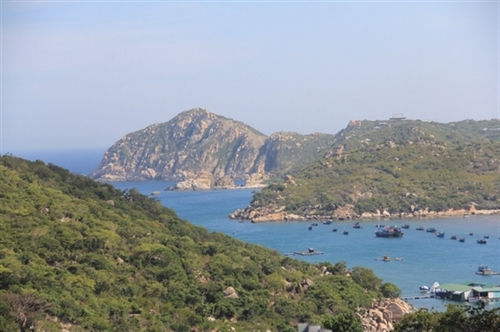
 Vietnam’s two biosphere reserves of Nui Chua and Kon Ha Nung have received UNESCO recognition after a vote at the ongoing meeting in Nigeria.

 
The two biosphere reserves located in the central province of Ninh Thuan and the Central Highlands province of Gia Lai, respectively, officially became world biosphere reserves at the 33rd session of the International Coordinating Council of the Man and the Biosphere Program (CIC-MAB) in Nigeria from September 13-17.
 
Part of the Nui Chua Biosphere Reserve in the south-central province of Ninh Thuan__Photo: The Ministry of Foreign Affairs 

The event takes place in both online and offline forms marking the first time an annual meeting of CIC-MAB has been organized in an African country.
 
The two Vietnam wildlife areas were among 22 other candidates of 20 countries and groups of countries seeking UNESCO recognition at the event.
 
With this recognition, they have helped increase the total world biosphere reserves in Vietnam to 11, making it one of the countries with the largest number of UNESCO-recognized biosphere reserves.
 
Le Thi Hong Van, Ambassador and Vietnam’s permanent representative to UNESCO, said Vietnam was the only country with two dossiers approved immediately from the first round. After six years, the country has had new biosphere reserves cited in the world list.
 
On this occasion, CIC-MAB also reviewed Vietnam's 10-year periodical reports on management and development of Can Gio World Biosphere Reserve and Cu Lao Cham - Hoi An. These reports had been highly appreciated by the council.
 
Nui Chua Biosphere Reserve in Ninh Thuan Province is a typical ecosystem in Southeast Asia, with a natural area of 29,856ha. Its core area of Nui Chua National Park is converging three natural areas of forest, sea and semi-desert, including many rich and diverse ecosystems.
 
This is living the habitat of more than 1,500 plant species, including 10 endemics and 54 rares recorded in the Vietnam Red Book and the World Red List. The fauna is also very rich with 756 species of wild animals, over 350 of coral, and hundreds of marine animals.
 
Nui Chua sea is also a rare place on the mainland where sea turtles come to lay eggs every year and are currently protected.
 
One of the special features of Nui Chua National Park is that this area has a dry and hot climate similar to many places in Africa (the highest temperature is approximately 42 degrees Celsius). Therefore, this place is also called "Phan Rang Dry Forest".
 
The harsh climate and diverse topography have created a standard for the most typical and unique dry forest ecosystem of Vietnam and Southeast Asia.
 
Meanwhile, Kon Ha Nung Plateau Biosphere Reserve in the Central Highlands province of Gia Lai, covers a total area of 413,511.67ha with two core areas, Kon Ka Kinh National Park and Kon Chu Rang Nature Reserve.
 
 
Kon Ha Nung Plateau Biosphere Reserve in the Central Highlands province of Gia Lai.
The reserve has a closed subtropical humid evergreen forest ecosystem that remains relatively intact. It boasts high biodiversity, typical for forest ecosystem, forest flora and fauna in the Central Highlands.
 
The Biosphere Reserve also plays an important role in fostering socio-economic development and maintaining ecological balance of the Central Highlands and the Central and Southeast regions.
 
In addition, the two Biosphere Reserves both contain rich and unique cultural heritage treasures with many outstanding features of tangible and intangible cultural values of ethnic minority groups living there.

PM launches programme to provide computers for disadvantaged students

21:53 |
Over 1 million computers worth 2.5 trillion VND (over 109.6 million USD) and 3 trillion VND (over 131.5 million USD) to provide mobile services are presented to the progamme.

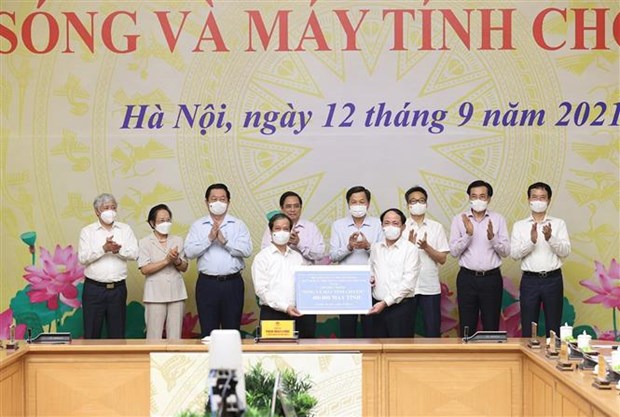
Prime Minister Pham Minh Chinh on September 12 launched a programme to provide computers and telecommunications services for students and pupils with difficult circumstances, especially those living in areas hit by the COVID-19 pandemic.

The launching ceremony was held virtually and connected to 63 provinces and cities nationwide.

The program aims to mobilise 1 million computers, and ensure mobile service coverage at all 283 points without mobile Internet connection in localities that are applying social distancing regulations, and 1,910 other places nationwide.

According to statistics from the Ministry of Education and Training, as of September 12, online teaching and learning has been deployed in 26 out of 63 provinces and cities across the country. The total number of students joining online studying is estimated at 7.35 million, of them 1.5 million do not have computers.
PM Chinh said the Government is very interested in the safe opening of schools.

However, in the context of complicated developments of the pandemic, many students do not have computers for their online study, and in many places, the internet network is unstable or there is no connection, he said.

According to the PM, online learning and teaching is a new education method, which require educators, psychologists and teachers to suitably adjust teaching methods and contents.

He requested the Ministry of Health to coordinate with the Ministry of Education and Training, relevant sectors and localities to accelerate COVID-19 vaccination for children.

Meanwhile, the Ministry of Information and Communications was asked to work with the Ministry of Education and Training, relevant ministries and sectors, and localities to ensure internet connection for online teaching and learning.

At the ceremony, over 1 million computers worth 2.5 trillion VND (over 109.6 million USD), and 3 trillion VND (over 131.5 million USD) to provide mobile services, were presented to the progamme./.

Vietnam provides support for foreigners amid pandemic

21:51 |
                                     A foreigner gets vaccinated against covid-19 in HCM City

Despite limited resources, the Vietnamese Government and local authorities are sparing no efforts to support and ensure safety for the expat community in Vietnam amid the COVID-19 outbreak.

As the vaccination drive is being accelerated across the country, the Vietnamese Government is determined to provide vaccinations for all foreigners living and working here, ensure them equal access to vaccines like local people.

With the motto of “leaving no one behind”, on September 6, Prime Minister Pham Minh Chinh issued a document asking all localities and sectors to organise registrations and free vaccinations for foreigners in each locality regardless of nationality, form of residence and employment.

In Ho Chi Minh City, the country’s current largest COVID-19 hotspot, the city's authorities have mobilised all resources within its capacity to inoculate foreigners.

Duong Anh Duc, Vice Chairman of the HCM City People’s Committee, said the city’s authority tasked the Department of Health to allocate vaccines and organise vaccination campaigns for foreigners.

A representative of HCM City's Department of Foreign Affairs told Vietnam News that the department had closely worked with the Department of Health in this cause.

On September 10, the Department of Foreign Affairs announced a registration portal on the internet for foreigners to sign up for vaccination, including for the first or second dose. All registration must be completed before September 15.

Earlier, some districts in the city carried out their own vaccination drive for foreigners.

District 7, which has the biggest community of expats in the city, has already inoculated 18,000 foreigners of 106 nationalities, which is more than half of the foreigners living in the locality.

Meanwhile in Hanoi, the Central Lung Hospital is assigned by the Ministry of Health to deploy vaccination for embassies, United Nations organisations and diplomatic missions, as well as foreigners in the capital city.

Up to now, the hospital has vaccinated more than 4,000 officials and employees of embassies, 4,251 foreigners, nearly 2,000 United Nations officials and employees and nearly 340 staff of NGOs in the capital city.

As Hanoi is setting a target of inoculating 100 percent of adult residents before September 15, many more foreigners, together with local people, are also receiving the jabs provided by authorities at district level.

Last week, Cau Giay district where about 4,000 foreigners are working and studying, started a large-scale vaccination campaign for foreigners.

Trinh Thi Dung, Vice Chairwoman of the district’s People’s Committee, said the committee had assigned relevant units to submit the list of foreigners who need to be vaccinated against COVID-19 in the locality. They would be given the jabs in the shortest time possible.

Besides vaccination, local authorities have also supported foreigners in need in other ways.

In early September, the Hanoi Union of Friendship Organisations coordinated with Hanoi’s Vietnam Fatherland Front Committee to hand over hundreds of gift packages, including food, necessities, medical supplies and 500,000 VND (22 USD) in cash to 270 foreigners living in the city who face difficulties due to the pandemic.

Tran Thi Phuong, Vice President of the Hanoi Union of Friendship Organisations, said: “It is just a small gesture but we hope this has shown international friends the spirit of hospitality and care of the capital’s authorities and people.”

In the central city of Da Nang, eight hotlines in English, Japanese, Korean and Chinese were set up in late August to help foreigners solve difficulties amid strict COVID-19 restrictions.

Nguyen Thuy Anh, Deputy Director of the city’s Department of Foreign Affairs, told Vietnam News: “From August 27 to September 9, the hotlines received about 560 calls, messages and emails from foreigners and overseas Vietnamese living in the city related to issues like support to buy food, essential goods and medicines, visa extensions, procedures to go to the airport or register for a vaccination, among others.

“The department has coordinated with the People’s Committees of districts to buy and present free food to nearly 120 cases in difficult situations.”

Thuy Anh added that in addition to this activity, the department regularly updated the guidelines and regulations of the central and local governments, mainly in English and Vietnamese to the expat community in the city by sending the information to various channels like foreign NGOs, foreign consular offices or posting information on the Connecting Da Nang Worldwide Facebook page.

“Depending on the nature of the issues, some documents and decisions of the city People’s Committee are also translated to Japanese, Korean and Chinese,” she said.

Although not having a hotline available to the general public like in Da Nang, HCM City’s Department of Foreign Affairs has hotlines to directly work with foreign representative offices in the city to help settle foreigners’ issues.

“For example, we have worked with them to help arrange transportation for foreigners to go to the airport or work with other localities to help stranded foreigners come back to the city to catch a flight home,” the department's representative said.

He said supporting disadvantaged foreigners was a policy set out by the city authority early on, which was carried out with the coordination of different agencies including the city’s High Command, the city’s police, the Department of Labour, Invalids and Social Affairs and the Department of Foreign Affairs.

In the past few months, as HCM City tightened its social distancing orders and required people to shelter in place, many foreigners struggled to get food due to the language barrier, shortage of delivery workers and financial difficulties.

“In the coming days, the city will open a centre run by the High Command to provide accommodation and food to homeless foreigners and other foreigners in need,” he said./.

Được tạo bởi Blogger.