Restore sexual, reproductive health rights lost during COVID

21:37 |

 Sexual and reproductive health rights, are human rights, the independent UN expert on the right to health reminded Member States in the General Assembly on Wednesday, saying that it was essential to restore services in the field, that have been eroded during the COVID-19 pandemic

Millions of women globally had limited or no access to maternal and new-born healthcare, some 14 million women lost access to contraception, and specialized services for victims of gender-based violence became inaccessible, when they were needed most”, said Dr. Tlaleng Mofokeng.

The Special Rapporteur pointed out that lockdowns, movement restrictions and diversion of funds due to COVID-19 have “jeopardized access to essential sexual and reproductive health services”.

In presenting her report on the effect of the pandemic on physical and mental health services, she also spoke of “new measures and laws in place across regions, further restricting access to safe abortion, a component of sexual and reproductive services encompassed in the right to health”.

Reversing a legacy

As part of the right to health, the UN expert called on States to move beyond the COVID-19 pandemic to rebuild and strengthen health systems for advancing sexual and reproductive health rights for all.

“Governments must remove obstacles and ensure full access to quality services, including maternal health care, contraception and abortion services, screening for reproductive cancers and comprehensive sexual education”, she said.


However, Dr. Mofokeng noted that many obstacles continue to stand between individuals and their exercise of their rights to health, rooted in patriarchy and colonialism, and others in structural and systemic inequalities.

Patriarchal oppression is universal, permeates all societies and is at the very origin of the erosion of autonomy and the control of girls and women’s bodies and sexuality to the detriment of their enjoyment of sexual and reproductive rights”, she spelled out.

“Colonialism has permeated patriarchy across regions and its legacy continues today through laws, policies and practices that deny or restrict sexual and reproductive rights and criminalize gender diverse identities and consensual adult same-sex acts”, added the Special Rapporteur.

Rooted in law

She reminded governments that sexual and reproductive health rights are rooted in binding human rights treaties, jurisprudence, and consensus outcome documents of international conferences.

“I call on States to respect and protect key principles of autonomy, bodily integrity, dignity and well-being of individuals, especially in relation to sexual and reproductive health rights”, she said.

“I pledge to engage with States and all relevant actors to uphold the right of everyone to the enjoyment of the highest attainable standard of physical and mental health”.

Dr. Mofokeng, and all Special Rapporteurs are appointed by the Geneva-based UN Human Rights Council to examine and report back on a specific human rights theme or a country situation. Their positions are honorary, they are not UN staff nor are they paid for their work.

Act now to stamp out child labour by 2025

21:30 |


Millions worldwide affected

Some 160 million boys and girls worldwide, almost one in 10, are forced into work. The majority, 112 million, or around 70 per cent, work in crop production, livestock, forestry, fisheries and aquaculture. 

But with the 2025 deadline fast approaching, Mr. Qu stressed that effective action and “strong and coherent leadership from agri-food stakeholders across the globe, is critical”.

Child labour is a serious violation of human rights, FAO explained.  It deprives boys and girls of their childhood, their potential and dignity, while also being harmful to their physical and mental development.

Although not all work carried out by children is considered child labour, much of it is not age-appropriate, the agency said, and many vulnerable families, especially in rural areas, have no choice. 

‘A moral responsibility’

Contributing factors include low family incomes, few livelihood alternatives, limited access to education, inadequate labour-saving technologies, and traditional attitudes surrounding children’s participation in agriculture.  The COVID-19 pandemic has added to these issues.

Kailash Satyarthi, an Indian social reformer and co-recipient of the 2014 Nobel Peace Prize, along with Malala Yousafzai, spoke about the devastating impacts.

“Nothing is as brutal as the death of a child’s dream,” said Mr. Satyarthi, who campaigned against child labour in his homeland. “We should feel the moral responsibility that we have to fulfil the dreams of these children.”

Listen to an interview with Kailash Satyarthi here

The Global Solutions Forum is being held in the context of the International Year for the Elimination of Child Labour.  It brings together representatives from various sectors, including government ministries, farmers' organizations, workers' groups, and development banks, businesses, as well as children, youth advocates, and former child labourers.

Prolonging poverty

The event is organized by FAO alongside sister UN agency, the International Labour Organization (ILO), together with the International

Partnership for Cooperation on Child Labour in Agriculture (IPCCLA) and Alliance 8.7, a global initiative against forced labour.

In his remarks to the forum, Guy Ryder, the ILO Director General, underlined that child labour did not have to continue indefinitely.

“Child labour is not an escape road from poverty, it actually prolongs poverty; it makes poverty intergenerational. We have to help people out of this vicious circle of poverty and that’s not an easy task,” he said.

Focus on rural families

Henrietta Fore, Executive Director of the UN Children’s Fund, UNICEF, outlined some of the solutions, which involve providing income support for vulnerable families, better healthcare and education, and expanding social and child protection.

“If we want to make a difference in ending child labour, this is where we need to focus significant efforts: in rural areas, with families, where agriculture is an important source of livelihoods,” she stressed.

Participants also heard from Pope Francis, whose message was delivered by Monsignor Fernando Chica Arellano, Ambassador of the Holy See.

Protecting children means decisive measures to support smallholder farmers, so that they are not obliged to send their children into the fields in order to increase their incomes, which, being so low, do not allow vulnerable farming families to maintain their households with dignity,” he read.

FAO is promoting efforts to boost the incomes of rural families so that they can send their children to school rather than have them work. 

For example, the agency is supporting the governments of Burkina Faso, Cambodia, Lebanon, Mali, Niger, Malawi, Pakistan, Uganda and Tanzania, in addressing child labour as an integral part of national agricultural policies.

Celebration of 40th anniversary of Vietnam Buddhist Sangha to be held online on Nov 7

21:44 |
                                                                  Illustrative image

Given the complicated development of the COVID-19 pandemic, the Executive Council of the Vietnam Buddhist Sangha (VBS) has decided to celebrate the 40th founding anniversary of VBS in the virtual form.

A virtual ceremony will be held on November 7 under the theme "40 years of the Vietnamese Buddhist Sangha: Integration and development with the country".

The celebration is an occasion for VBS to review its achievements in the development of the organisation, and also an opportunity to promote the awareness of Buddhist monks, nuns, and followers on national unity about their responsibility towards building the VBS and national development in the period of international integration.

Over the past 40 years of development, the VBS has guided monks, nuns, and Buddhists to practice Buddhist teachings, uphold patriotism and national unity and contribute to building an advanced Vietnamese culture imbued with national unity./.

Smart city building sped up in Vietnam

21:43 |
             About 40 Vietnamese cities and provinces have set forth projects on smart cities

The outbreak of the COVID-19 pandemic over the past two years has sped up the building and development of smart cities, heard Vietnam- ASOCIO Smart City Summit 2021 that opened on November 2.

Jointly held by the Vietnam Software Association (VINASA) and the Asian-Oceanian Computing Industry Organisation (ASOCIO), the five-day event brought together representatives from 59 cities and provinces, and was linked to 70 locations.

In his remarks, Deputy Minister of Information and Communications Nguyen Huy Dung said his ministry had issued a number of guidance documents to create a legal framework for the development of smart cities in terms of information-technology.

The summit offers an opportunity for management agencies, experts, scholars and IT businesspeople of Vietnam and foreign countries to exchange experience in this regard, he added.

Developing smart cities has become an inevitable trend, he said, noting that the Vietnamese government has issued Decision No. 950/QD-TTg approving the project on the sustainable development of smart cities for 2018-2025, with a vision to 2030.

The Politburo has also issued Resolution No. 52-NQ/TW on a number of guidelines and policies on proactively joining the fourth Industrial Revolution, which sets the target of having at least three smart cities in northern, central and southern key economic regions by 2025.

Echoing Deputy Minister Dung’s views, VINASA Chairman Nguyen Van Khoa said along with digital transformation, smart cities are becoming the new development mode of urban areas in the era of intelligentisation.     
 
About 40 Vietnamese cities and provinces have set forth projects on smart cities, he said, adding that smart industrial parks and factories have also been taken into consideration.

With 14 seminars, the summit will focus on such topics as digital authority, smart property, smart industrial property, digital transformation for smart producers and factories, and digital solutions and startups with smart cities./.

Gender equality to be included in community’s code of ethics

21:41 |
                                                               Illustrative image

Gender equality will be added into village codes and conventions – the code of ethics developed by the community that has long played an important role in managing social relations in the community in Vietnam.

Under a new decision by Prime Minister Pham Minh Chinh, the village code and convention at every grassroots level in the country will include principles like gender equality in society and family, as well as no gender-based discrimination.

Gender issues must be integrated into law building and enforcement.

The amendment and supplementation to community ethical codes are expected to promote and ensure gender equality, for example raising public awareness on gender equality and gender-based violence, preventing and fighting family violence, as well as raising the status of women and girls in society and the family.

Changes to community ethical codes are expected to help increase gender equality in politics, economy, labour, education, science and technology, healthcare, culture and sports.

It is expected that girls and women will be given more chances to participate in social activities.

Amended community ethical codes in Vietnam helped raise public awareness on cultural and civilised lifestyles during weddings, funerals and festivals, thus changing public behaviour, abandoning outdated procedures and curbing child marriage.

Under the Prime Minister’s decision on the gender equality communication programme issued on October 23, 2021, 95 percent of village codes and conventions in Vietnam will no longer contain gender-based discrimination by 2025.

By 2030, gender equality will be included in all village codes and conventions that are developed and implemented by the community from the grassroots levels, like villages, hamlets or residential groups.

Under the programme, in the next four years, all ministries, agencies and localities will have an annual plan on a month-long campaign to promote gender equality and respond to gender-based violence.

They are also required to apply technology and digital platforms, as well as diversify communication on the issues.

The Prime Minister also urges to further engage different stakeholders in communication work, mobilising resources and means.

The participation and response of agencies, organisations, businesses and people, especially leaders, managers, heads of agencies, and people with great prestige and influence in society could help generate positive results.

Gender equality education in families, schools and communities should be expanded and promoted.

The Prime Minister suggested developing and applying a set of indicators on gender communication.

He also asked for capacity building for communication officers, reporters, editors, reporters, and media collaborators at all levels.

It is also necessary to strengthen communication on laws, policies and achievements on gender equality of Vietnam, to fight and oppose false information about gender equality and policies of the Party and State of Vietnam, to strengthen the inspection and supervision of promoting and dissemination of the law on gender equality./.

Viet Nam to take stronger measures to achieve net-zero emissions by 2050

21:52 |

  Viet Nam will take stronger measures to achieve net-zero emissions by 2050, affirmed Prime Minister Pham Minh Chinh at the COP16.

Vietnamese Prime Minister Pham Minh Chinh addresses the 26th United Nations Climate Change Conference of the Parties (COP26), Glasgow, the UK, November 1, 2021

Addressing the COP16 on Monday, Pham said climate change has caused serious impacts on food security, water security, sustainable development and even threatened the survival of many countries and communities, thus requiring the international community to act faster and bolder.

He underscored that responding to climate change and restoring the nature must be the top priority of all development policies as well as the highest moral standard of all levels, sectors, businesses and individuals.

Pham underlined the importance of science, financial resources, and natured-based and people-centric actions to foster growth model transformation towards green growth.

He called on all countries to set strong commitments to reduce greenhouse gas emissions on the basis of common but differentiated responsibility.

As climate finance, technological transfer and capacity building play a vital role in successful realization of the Paris Agreement, Pham urged developed countries to fully implement their financial commitments and make more funding commitments for post-2025 period./.

Vietnamese top region in streaming YouTube on TV

17:51 |


There was a growing trend of streaming YouTube on TVs in the Asia Pacific region with Việt Nam being the country with the fastest growth in connected TVs,  a YouTube Brandcast Delivered 2021 event heard on October 28.

More than 25 million Vietnamese streamed YouTube on their connected TV screens in May, data from the streaming service showed.

The COVID-19 pandemic changed all activities like studying, working and entertainment amid the social distancing in the first three quarters of this year.

As more people stayed at home, they turned to YouTube for their communities, learning, entertainment, and other needs.   

Some 45 per cent of internet users in Việt Nam own a smart TV or connected TV, and 28.2 per cent access the internet through a smart TV, and the number is expected to grow.

More than 90 per cent watch with family and friends, and 90 per cent of YouTube viewers say they pay more attention while watching with others.

In May 2021 the average view length on YouTube CTV was 90 per cent longer than on mobile and desktop.

Trâm Nguyễn, Google country director for Vietnam, Laos and Cambodia, said Youtube reached over 45 million people in Việt Nam aged 18 and above.

More than 950 YouTube channels in the country have over 1 million subscribers, an increase of over 35 per cent since last year.

The average person in Việt Nam watches over 70 minutes of YouTube per day, which shows how important video content is in daily life, she said.

YouTube Brandcast is the largest annual event for advertisers, agencies and content partners on the  platform.

It brings together senior executives, brand managers, media planners, creators, and content partners from leading companies to share the latest information on market trends and solutions./.

Vietnamese culinary records recognised by international organisations

17:49 |


The World Record Association (WRA) based in Hong Kong acknowledged five world culinary records from Việt Nam.

These five world records of Vietnamese cuisine were recognised by the World Records Union (WorldKings) in 2020, after over eight years of research and nomination.

This is the first time that Việt Nam has held five culinary records granted by two world organisations at the same time.

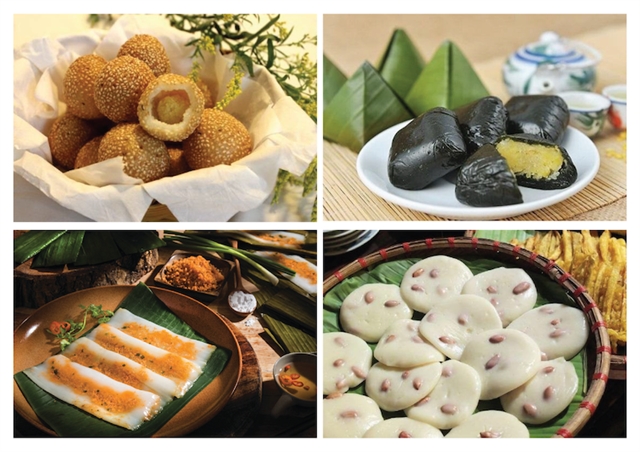
According to Vietnam Records Organisation (VietKings), WRA has approved five world records of Vietnamese cuisine: the country owns the most “strand and broth” dishes in the world; the country owns the most kinds of Mắm (salted fish) and dishes make from Mắm with typical flavours in the world; the country owns the world’s most dishes made from flowers; the country owns the most kinds of special roll in the world; and the country owns the world’s most dishes made from rice flour.

The new records have showcased the world’s recognition of the attractiveness of Vietnamese cuisine with rustic, simple but flavourful dishes, which have been created from natural ingredients, passion of local chefs and the inheritance of tradition.

"Vietnamese dishes not only have a balance of flavours such as sour, spicy, salty, sweet, bitter, but also a perfect balance of nutrition,” said Lê Trần Trường An, the General Director of VietKings.

“Such dishes deserve to become culinary heritages that need to be preserved and promoted. They are truly the quintessential values of Vietnamese cuisine passed down from the ancestors and have been constantly innovated by chefs over time."

VietKings also revealed that the organisation is finalising a dossier to nominate six new culinary records to WorldKings and WRA, continuing the journey of promoting Việt Nam's special values to the world.

Việt Nam owns the world’s most dishes made from rice flour. — Photo courtesy of WorldKings

“The journey to search and promote the special values of Vietnamese culinary art was started by VietKings in 2012. Although it took much time and effort to comply with the procedures and criteria, we didn’t feel worried as the nominations had always received attention from all over the country. Localities have nominated thousands of their dishes and specialties with distinctive flavours. Thanks to that, the process of submitting applications to WorldKings and the World Records Association (WRA) did not face any significant difficulties,” An said.

“For the first time, five world records of Vietnamese cuisine have been set and acknowledged by two international records organisations at the same time, which is really good news”./.

Được tạo bởi Blogger.