Young people wave at their families at a see-off ceremony
Thousands of young people nationwide are leaving home to join the army for their military service in late February.
A ceremony to see off newly-recruited soldiers in Hanoi’s Dan Phuong district on February 20 was attended by General Luong Cuong, Chairman of the General Political Department of the Vietnam People’s Army (VPA); Nguyen Duc Chung, Chairman of Hanoi city People’s Committee and Chairman of the city’s military service council; Major General Nguyen Hong Thai, Commander of the Hanoi Capital Command, among other guests.
On behalf of the new soldiers, Vuong Chuong Dinh from Dan Phuong’s Phuong Dinh commune said he felt proud to follow the path of older generations.
Hugging his mother at the ceremony, Tran Van Quang said he is resolved to be a good soldier, adding that he wants to improve his knowledge so that he can contribute to local development after completing his military service.
At similar ceremonies in other districts of Hanoi, newly conscripted soldiers said they are eager to fulfil their duty as citizens to the motherland.
Deputy Chief of the General Staff of the VPA Lieutenant General Nguyen Tan Cuong attended a ceremony in the northern province of Ha Nam.
In the north central province of Thanh Hoa, all 27 districts, towns and cities also held send-off ceremonies for new soldiers on February 20.
The same day, the northern province of Quang Ninh also completed the hand-over of all newly-conscripted soldiers to the army.
In Vietnam, military service is compulsory for young men aged between 18 and 25 years old, while women can volunteer.
The central province plans to allocate a fund of VNĐ100 billion (US$4.4 million) to restore a 100ha forest as a safe habitat for a herd of gray-shanked douc langurs (pygathrix cinerea) living in Đồng Cổ Village, Tam Mỹ Tây Commune of Núi Thành district in 2019-28.
Vice chairman of the provincial people’s committee, Lê Trí Thanh said the state budget would provide 60 per cent for the fund, while the remainder would be taken from NGOs or community and businesses.
Thanh said the fund would help isolate human activities on log farms in the area from the gray-shanked douc langurs, and conserve 30ha natural forest as a safe shelter for the endangered primates.
The fund would be used for compensation of 70ha acacia log farm of 30 households living in six villages in the area.
As planned, the province would design the habitat of the langurs as an eco-tour site in serving for research and the primates study centre among conservationists in the world and Việt Nam.
The province, in co-operation with the Centre of Biodiversity Conservation, GreenViet and World Wide Fund for Nature (WWF), plans to include the forest area as part of the United States Agency for International Development (USAID)-funded Green Annamites Project.
According to the province, the Green Annamites Project will be invested with approximately US$24 million in Quảng Nam and Thừa Thiên-Huế provinces in assisting Việt Nam’s transition to climate-smart and low-emission development through improved forest protection, enhanced biodiversity conservation, and increased resilience of communities in 2016-20.
Currently, the herd of the langurs has been narrowed in a 10ha primary forest as the fast growing development of acacia log farm – one of the most profitable woods in the central region.
In a recent report by the province’s Forest Protection Division, a herd of about 50 gray-shanked douc langurs was found living in the forest over the past 10 years.
Local community and the district ranger force established a voluntarily team to protect the endangered primates from being hunted in recent years.
According to experts from the Frankfurt Zoological Society’s Việt Nam Primate Conservation Programme, some 1,000 gray-shanked doucs have been found in forests of five provinces, including Quảng Nam, Quảng Ngãi, Bình Định, Kon Tum and Gia Lai.
The gray-shanked douc langur is listed on the International Union for Conservation of Nature red list as one of the world’s 25 critically endangered primates.
Last year, the province allocated nearly 19,000ha for an elephant conservation centre in two communes – Quế Lâm and Phước Ninh – in the mountainous Nông Sơn district./.
Prime Minister Nguyen Xuan Phuc has chaired a meeting to review the preparation for the second summit between the Democratic People’s Republic of Korea (DPRK) and the US in Vietnam’s capital city of Hanoi. PM Phuc praised the urgency and efforts of relevant agencies in the work, while giving specific guidance on the preparation for the event.
This is an important international event that draw special concern of the international community, he stressed.
He said that the hosting of the summit continues to affirm the increasing position of Vietnam as well as its role and positive and responsible contributions to international issues.
The Prime Minister directed ministries and sectors to do their utmost to ensure security and safety for the summit, making it a success.
Special attention should be paid to the reception work, he said, stressing the need to create maximum conditions for international reporters to cover the event.
The preparation must be done urgently and carefully so that not only friends can feel friendliness and hospitality of Vietnamese people but locals also know more about the meaning of the summit and the country’s international role and prestige, the PM said.
He noted that the summit is a valuable opportunity to promote the images of Vietnam and its all-round development achievements as well as potential for investment, trade and tourism development to international friends.
As the summit will take place on the occasion of 20 years since Hanoi received the “City for Peace” title by UNESCO, the capital should take advantage of this opportunity to promote its image of a peaceful and friendly city with great potential for development cooperation, he said./.
The geopolitics on a global scale is experiencing unprecedented changes under the impacts made by the strategic competition between major powers. The East Asia, which remains the world’s most dynamic region and faces intertwined differences and risks of conflict, is at the forefront of the competition between America, China, Russia, the EU, India, and Japan that has been making huge changes in the regional security.
The East Asia - the centrepiece of the competition between the three new world orders
The East Asia is the place where the world’s greatest powers, namely America, China, Russia, Japan and the EU have been present and fiercely competing with one another and will form the 4th cycle of the world’s economy. America, China and Russia pursue three naturally different trends in building the world orders. US President Donald Trump determines to establish a new world order in which America will perform the role of “the world’s judge” in stead of “global police” and decide all international conventions under the conditions set by Washington. Meanwhile, China hopes to create a new world order with the Beijing Consensus via many strategic plans, the centrepiece of which is “Belt and Road” and “Made in China 2025”. As for Russia, President Vladimir Putin pursues a new world order in which all nations no matter how strong or weak, rich or poor they are must be respected and treated equally. Unlike his predecessors, US President Donald Trump believes that China is now taking the lead in economic development while Russia possesses the most powerful military in the world. Therefore, the US National Security Strategy during the Trump presidency considers China and Russia as the “comprehensive rivals”.
The East Sea: the centrepiece of the geopolitical competition between America and China
The comprehensive strategic competition between America and China is centred on the “Made in China 2025” and the “Belt and Road”. Those two strategic plans play a core role in enabling China to control 80% of the market share in terms of hi-tech goods in the foreseeable future. Therefore, US politicians from the Republican Party and the Democratic Party all believe that the two strategic plans by China represent the mainstay of the new world order Beijing is pursuing. To that end, China has formulated strategies to develop it into a maritime power on the basis of a postulate of the geopolitical theory in the UK in the 19th century: “Whosoever commands the sea commands the trade; whosoever commands the trade of the world commands the riches of the world, and consequently the world itself”. Since 2009, China has sought to control the East Sea. Typically, since 2013, Beijing has made huge investments in illegally upgrading and building artificial islands in the East Sea - the starting point of the “maritime silk road” in the “Belt and Road” Initiative. After 5 years only, China has completed the construction of artificial islands and is consolidating its outposts in the East Sea, building its artificial islands into “permanent aircraft carriers” in a bid to control the maritime passage of strategic importance to the annual global trade of 5.3 trillion USD passing through the East Sea.
To counter China’s ambition in the East Sea, the US National Defence Authorization Act for fiscal year 2019 signed by President Donald Trump on May 15th 2018 set out many measures to deal with China’s illegal militarization in this sea. Moreover, America has urged its allies to enhance their military presence in the East Sea. Accordingly, some of its allies, particularly the UK and France have made plans for cooperating with America in preventing China’s illegal militarization in the East Sea. Notably, a “diamond quadrangle”, including America, India, Japan, and Australia, has been shaped in order to realize the Indo-Pacific Strategy by the U.S. and contain China’s ambition in its “Belt and Road” strategic plan.
To reduce the pressure from America, China has agreed to negotiate with Southeast Asian countries about the Code of Conduct (COC) for the East Sea, which had always been delayed by Beijing (the first negotiation on the COC will take place in Myanmar in the first quarter of 2019). However, China is seeking to include many improper points in the COC, such as prohibiting countries outside the East Sea from joining military exercises in this sea, preventing foreign companies from oil exploration and exploitation in the East Sea. As ASEAN member states will certainly oppose those conditions, negotiations for the COC will be very difficult.
It is also necessary to add that China’s militarization in the East Sea recently has partly overshadowed the dispute between Beijing and Tokyo over the islands called Diaoyudao by China and named Senkaku by Japan. However, Japan is worried about China’s ambition to occupy both Senkaku and the East Sea, which would directly threaten Japan’s national security and particularly its economic security as its energy transportation and shipping lines mainly pass through the East Sea. Therefore, in 2018, Japan increased its national defence budget to modernize its military, particularly its navy to neutralize security challenges from China.
Dispute between Russia and Japan over the Kuril Islands
Against quick changes in the world and the East Asia, Russia and Japan both hope to completely settle the dispute over the Kuril Islands which still remain under Russia administration. In 2016, during the visit by President Vladimir Putin to Japan, leaders of the two countries agreed to initiate the consultations on a mechanism for common economic operations on the Kuril Islands as well as to accelerate negotiations on the basis of the Soviet-Japanese Joint Declaration of 1956. According to the statement, once the two sides sign a Peace Treaty, the Soviet Union would hand over the islands of Habomai and Shikotan to Japan. Signing the Peace Treaty first and handing over the islands later or vice versa is the main problem between the two sides now.
According to President Vladimir Putin, Russia and Japan will sign a Peace Treaty without any prerequisite. Only when it is signed, will the two sides talk about Japan’s request for the handover of the 2 islands in the Kuril archipelago. However, Moscow is still worried that after being handed over to Tokyo, those islands could become the US military bases threatening Russia’s security in the Far East. To resolve that doubt, Japanese Prime Minister ever pledged that the US troops stationed in Japan would not pose any risk to Russia. Nevertheless, Russia was taught a bitter lesson on America’s promise not to expand the NATO if the Soviet Union agreed with the removal of Berlin wall and the German reunification, but afterwards, the NATO not only had more new members but also brought its military bases closer to Russia’s border.
Unprecedented geopolitical changes on the Korean Peninsula
In 2018, the world witnessed the unprecedented changes on the Korean Peninsula related to the relations between North Korea and South Korea and the pledge of a denuclearized Korean Peninsula and a lasting peace by America and North Korea. The historic meeting between North Korean leader Kim Jong-un and US President Donald Trump opened up a new chapter in the relations between the two countries. In 2019, negotiations between Washington and Pyongyang will continue to take place and could achieve new progress on denuclearizing the Korean Peninsula and maintaining a durable peace. Delivering the New Year’s message, South Korean President Moon Jae-in pledged that the peace process on the Korean Peninsula would never be reversed. Meanwhile in his New Year address, North Korean leader Kim Jong-un stated that he would be prepared to attend the second meeting with US President Donald Trump.
Russia, the EU and India adjust their strategy towards the East Asia
As the Asia in general and the East Asia in particular are rising as the centrepiece of geopolitical competition in the world, Russia, India and the EU have all adjusted their strategy towards the East Asia. Russia held the Eastern Economic Forum which was seen as “Russia’s Davos Economic Forum” to develop the Far East. In 2018, the relations between Russia and the ASEAN were developed into strategic partnership. Russia maintains good relations with both North Korea and South Korea. India changed the Look East Policy into the Act East Policy in a bid to promote economic, political, and security cooperation with East Asian countries. In 2018, the EU implemented the strategy to connect Europe and Asia as a counterbalance to China’s “Belt and Road”.
The strategic competition between major powers has been completely changing the complexion of the East Asia. Unlike the Europe with long-established multilateral security institutions, such as the NATO, the Organization for Security and Cooperation in Europe (OSCE), and the Collective Security Treaty Organization (CSTO), Asia in general and East Asia in particular have not established a common security framework yet. Besides, while traditional allies and new partners should have been gathered to deal with China as a rival of the US, President Donald Trump decided to withdraw from the Trans-Pacific Partnership Agreement (TPP) and declare trade war with key allies of the US, namely Japan and South Korea, which made the US allies feel isolated by Washington.
Recently, US President Donald Trump has suddenly decided to withdraw the US troops from Syria, abandoning the US allies to the fight against terrorism, raising doubts among the US allies in the East Asia. Against that backdrop, the ASEAN is emerging as the centre of a common security and cooperation structure which is being shaped in the East Asia. Therefore, it is believed that the annual ASEAN Summit, the East Asia Forum, and the ASEAN Defence Ministers’ Meeting Plus (ADMM+) will significantly contribute to maintaining peace and stability in the region while the ASEAN Regional Forum (ARF) will provide opportunities for major powers to meet one another and seek for a common voice in order to settle differences, prevent conflicts, strengthen cooperation, and neutralize destabilizing factors for the sake of a peaceful and prosperous East Asia.
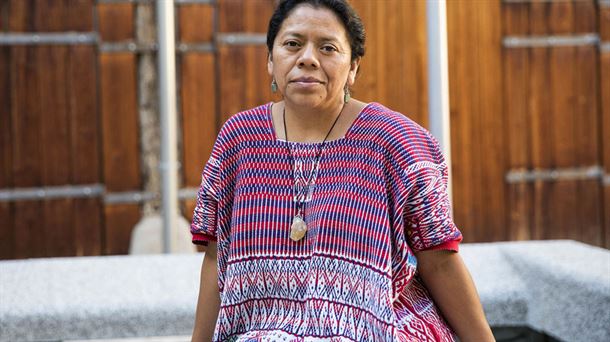
"We're in a very difficult situation. There is militarisation at a regional level, and gender-based violence. We are at risk, we cannot silence that," Aura Lolita Chávez, an indigenous woman from Guatemala, complained at a meeting of human rights defenders from Latin America held in the Mexican capital.
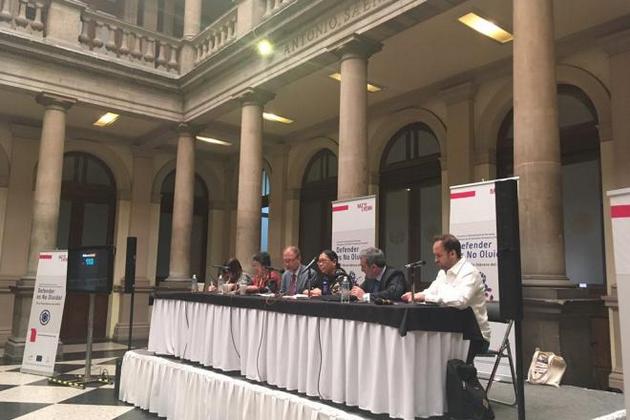
Some 50 human rights defenders from Latin America held a meeting at the Journalists Club in Mexico City to exchange strategies and analyse the challenges they face in the most lethal region for activists. Special rapporteurs on indigenous peoples, displaced persons and freedom of expression attended the meeting. Credit: Emilio Godoy/IPS
Chávez, who was a finalist for the European Parliament's Sakharov Prize for Freedom of Thought in 2017, and winner of the Ignacio Ellacuría Prize of the Basque Agency for Development Cooperation that same year, is an organiser of the opposition by native communities in western Guatemala against mining companies, hydroelectric dams and African oil palm producers.
She has received death threats and attacks that forced her to seek refuge in Spain in 2017.
But her case is far from an exception, in Guatemala and in the rest of Latin America, the most lethal region for human rights defenders according to different reports, especially activists involved in defending land rights and the environment.
In this increasingly alarming context, Chávez and some 50 activists from Brazil, Colombia, Guatemala, Honduras, Mexico, Nicaragua, the United States and Uruguay participated in the International Meeting of Human Rights Defenders and Journalists in Mexico City from Feb. 15-18, under the slogan "Defending does not mean forgetting."
Guests at the meeting were United Nations Special Rapporteur on the Rights of Indigenous Peoples, Victoria Tauli-Corpuz from the Philippines; UN Special Rapporteur on the Human Rights of Internally Displaced Persons, Cecilia Jiménez-Damary from the Philippines; and the Inter-American Commission on Human Rights (IACHR) Special Rapporteur on Freedom of Expression, Edison Lanza from Uruguay.
The human rights defenders identified common threats such as interference by mining and oil companies in indigenous territories, government campaigns against activists, judicial persecution, gender-based violence, and polarised societies that often fail to recognise the defence of human rights.
Evelia Bahena, an activist from the southern Mexican state of Guerrero, told IPS about "the suffering and destruction" at the hands of "companies that make profits at the cost of the lives of others."
In the municipality of Cocula, Bahena has fought against mining projects, which drew threats and lawsuits against her, forcing her to flee her community - a common fate for activists struggling against mega-projects that harm the social fabric and natural resources of the villages and towns where they are built, and the rights of local residents.
Award-winning Guatemalan indigenous activist Aura Lolita Chávez, leader of the K'iche's Council of Peoples, has been forced to seek refuge in Spain because of death threats and attacks, due to her struggle against the activities of companies that affect the environment and indigenous territories in her country. Credit: Courtesy of ETB
A number of reports have focused on the plight of human rights defenders in the region. In the report "At what cost? Irresponsible Business and the Murder of Land and Environment Defenders 2017", published in July 2018, the international organisation Global Witness stated that of the total of 201 murders of human rights defenders in the world in 2017, 60 percent happened in Latin America.
Brazil recorded the highest number of homicides of activists of any country, 57. In Mexico, the number was 15, five times more than the year before, while Nicaragua recorded the highest murder rate of activists relative to its population, with four killings, according to the British-based organisation.
The "Global Analysis 2018", produced by the international organisation Front Line Defenders, also depicts a grim outlook, counting 321 human rights defenders killed in 27 countries, nine more than in 2017. Of that total, 77 percent involved defenders of the land, the environment and indigenous people.
In the Americas, the most common violations consisted of threats and smear campaigns, according to the Irish-based organisation. In Colombia, 126 activists were murdered; in Mexico, 48; in Guatemala, 26; in Brazil, 23; and in Honduras, eight.
For Ana María Rodríguez, a representative of the Colombian Commission of Jurists, difficult conditions persist in her country, where 20 human rights activists have been murdered so far in 2019.
"We still don't have an effective response from the state" to guarantee the safety of human rights defenders, Rodríguez told IPS.
The most numerous victims are social organisers from areas once controlled by the Revolutionary Armed Forces of Colombia (FARC), a guerrilla group that is now a political party with representation in parliament, after signing a peace agreement with the government in 2016, ending half a century of armed conflict.
Special rapporteurs on different aspects of human rights take part in the Feb. 18 closing ceremony of the Latin American meeting of human rights defenders and journalists in Mexico City. Credit: Courtesy of CMDPDH
"There are delays and non-compliance with the peace agreement," which have contributed to the defencelessness of human rights activists, according to the lawyer.
In Mexico, this year has already claimed a deadly quota, with at least six human rights defenders and three journalists killed.
Added to this record number are the ongoing crises in Nicaragua and Venezuela, the arrival in January of far-right President Jair Bolsonaro in Brazil, who has issued open threats against civil society, and statements by leftist President Andrés Manuel López Obrador, in office in Mexico since December, against civil society organisations and journalists who take a critical stance.
The rapporteurs present at the meeting, on unofficial visits to Mexico, listened to the accounts given by activists and recalled that governments in the region have international obligations to respect, such as guaranteeing the rights of indigenous people, displaced persons and journalists, as well as protecting human rights defenders.
"One of the basic rights is to prior consultation and obtaining free, prior and informed consent," especially with respect to megaprojects, Tauli-Corpuz, UN special rapporteur on the rights of indigenous peoples, who belongs to the native Kankanaey Igorot people of the Philippines, told IPS.
In her October report on Mexico, the special rapporteur criticised the violation of rights of indigenous people, especially the right to prior consulation on energy, land or tourism projects in their territories.
López Obrador's government plans to build a railway running through five states in the south and southeast of the country and to create an overland route linking the Pacific and Atlantic coasts that runs across native lands - projects that are opposed by affected communities.
For his part, Lanza, the IACHR special rapporteur, said the recommendations of the joint report released in June 2018 with David Kaye, UN special rapporteur on the promotion and protection of the right to freedom of opinion and expression, should be the starting point for the measures to be adopted by the Mexican government.
"The important thing is for the State to comply with the recommendations. We are following that up," he told IPS. In March, his office will present its annual regional report on freedom of expression.
Jiménez-Damary highlighted that Colombia is the most critical case of forced internal displacement, with some 6.5 million victims as of 2017, while in Mexico some 345,000 people have had to leave their homes and in El Salvador, 296,000.
"One displaced person is already one too many. The state has the main responsibility" in such cases, the UN special rapporteur on the rights of internally displaced persons told IPS.
Nearly 3,000 journalists are expected to descend on Hà Nội next week for the biggest political event of the year.
US President Donald Trump and North Korea’s Supreme Leader Kim Jong-un will come face-to-face in Việt Nam’s capital city on February 27 and 28.
It’s only the second time the political heavyweights have ever met, but analysts predict this meeting has more significance than last year’s summit in Singapore.
“I think we can expect some good outcomes from this summit,” Lê Hồng Hiệp, a Vietnamese International Relations expert based in Singapore, told Việt Nam News.
“In the first summit, parties only committed to some vaguely worded commitments.
“I think President Trump would expect to have some significant outcomes from the summit to contribute to his foreign policy legacy and also to improve his standing inside the US ahead of the next Presidential election in 2020.”
For South Koreans living in Việt Nam, many believe next week could not only define the future of their two countries, but could help humankind.
Yoon Sang Ho, Chairman of the Korean Business Association in Hà Nội told Việt Nam News: “To be frank, I believe before this, no South Korean could have imagined that a day like today would come, especially the fact that it is being held in Hà Nội.
“This is something beyond our expectations and imagination. We hold very high expectations on the results of the summit.
“If there would be any statement on the denuclearisation of the Korea Peninsula and an official end of the Korean War at the summit, it would bring about peace for the Peninsula and contribute to world peace and the development of humankind.”
Yoon said he hoped the day would come when there were no longer two Korean countries, but instead just one nation.
“I strongly believe there will come a day when there is no longer a South Korea and North Korea, but just the single name, Korea,” he said.
“However there are still many obstacles to overcome to reach that day. With the upcoming summit, however, I believe it will come sooner.”
One thing that is guaranteed from this month’s meeting is the positive impact hosting the event will have for Hà Nội and Việt Nam.
Lê Hồng Hiệp believes the capital city is the perfect choice.
“Hà Nội is where North Korea has the embassy,” he said. “And it’s a very important condition for North Korea to have the embassy where the summit takes place because they need to communicate back to Pyongyang.
“Hà Nội is also famous for its ability to host major international events without incidents in the past. It is also within the range of North Korea’s aircrafts. So it’s quite convenient for North Korea to hold the meeting in Hà Nội.
“The US side indicated that the summit should be held in Đà Nẵng. And now they have agreed to hold the summit in Hà Nội, meaning they have made a concession to North Korea. But it’s not a bad idea for the US, either, because Hà Nội can meet the demands of security, logistics and media for the summit from a US perspective.”
Hiệp, who is a fellow with the Singapore-based ISEAS - Yusof Ishak Institute, thinks the summit is a great opportunity to showcase Hà Nội to the world.
He added: “This event will be a good chance for Việt Nam to promote its international standing. It can be a very good opportunity for Hà Nội and Việt Nam to sell its success story to the world and thereby attract more tourists and investors to the country.”
Sung-Yoon Loon, an expert on North Korea at Tufts University in Massachusetts, America, told Tuổi Trẻ (Youth) newspaper: “Việt Nam, as Singapore did, will gain much in publicity, image, tourism.
“Việt Nam will come across as a cosmopolitan, peace-seeking state that is a legitimate neutral ground for this historic moment.
“The summit pageantry will cast Việt Nam in a very positive light around the world. The summit will not only enhance Việt Nam’s international stature but also its leverage vis-a-vis China and the US in the short-term.”./.
Vietnam has registered some 268 strong standby army engineers to join the United Nations (UN)’s peacekeeping mission in South Sudan after the Defence Minister agreed in principle to dispatch an engineer troop in replacement of the UK’s in 2020.
Examining Vietnam’s registration to the Peacekeeping Capability Readiness System (PCRS), the UN has required that Vietnam better its major equipment and self-sustainment services. It will send a team to Vietnam for further inspection by mid-2019.
At a meeting in Hanoi on February 18, Colonel Hoang Kim Phung, Director of the Vietnam Peacekeeping Department, said that the department has joined hands with competent agencies to organise training courses as well as English and French language courses for the engineers.
Negotiation is underway with the UN and the UK for engineer replacement in February 2020 when the UK peacekeepers complete their mission and withdraw from the war-torn area.
There are currently five candidates for the position with Bangladesh, Cambodia, and Vietnam all granted level 1 readiness in the PSRS, which means they are all able to provide the list of major and self-sustainment equipment as well as the certification of completion of basic training and human rights screening. Meanwhile, China and Croatia have not registered to the system yet.
Phung said that the UN has voiced support for Vietnam if the Southeast Asian country can fit its capacity, human resources, and equipment requirements.
According to Deputy Minister of Defence Sen. Lieut. Gen. Nguyen Chi Vinh, the Vietnam Peacekeeping Department and relevant departments should coordinate in the purchase of equipment, ensuring that it meets the UN’s quality standards.
In addition, meticulous preparation must be made prior to the UN’s evaluation in a couple of months, he said, adding that the Engineer Corps High Command is responsible for accommodation and training, while the peacekeeping department and the Department of Foreign Relations are in charge of conducting surveys in the African country.
Also, he is asking the Republic of Korea, France, and the UK to provide professional training for Vietnamese troops.
Joining the UN’s peacekeeping force for the 2014-2020 period, Vietnam has so far sent 29 officers and one level-2 field hospital to the UN Multidimensional Integrated Stabilisation Mission in the Central African Republic and the UN Mission in South Sudan./.
For Francis Oko Armah, when you take a stand for young girls and women, you take a stand for everyone.
“People should know that standing and defending the human rights of girls and young women is standing for everyone,” he said. “Once we’re able to realise the inequalities and injustices that our girls and young women face, we stand for their human rights, and it means that we stand for the human rights of everyone else.”
Armah is a youth activist in Accra, Ghana, where he engages young people, especially women and girls, to learn more about reproductive health and demand access to health solutions. He does this in a variety of ways including using social media, traditional media, through work in schools and even hosting discussions for young people in community halls. He does this in rural locations throughout northern Ghana.
Education key to empowerment
Armah saw that many young girls and women faced gaps of knowledge in terms of sexual and reproductive health, which lead to early pregnancies and complications. He realized better informed girls and young women was key to claim their human rights to control their own bodies, their health and their education.
However, entering the conversation as a young man advocate in what is perceived as a female-owned dialogue, Armah encountered some resistance. It took time for him to build trust, with the girls and young women – many of whom wondered “what a man knew about menstruation?” He also had to battle against stereotypes from other men, who wondered if he was “man enough” to talk to them about things like safe sex and condoms.
The key to winning over both groups was communication, he said. For young people he was seen as someone who would listen to their problems and concerns – many for the first time. And he provides a space for them ask questions and get information.
“One of the strategies that worked for me … I organized some debates … between the boys and the girls about sexual health and … rights,” he said “And as the boys and girls argue their points, it moves from a discussion with just me to a discussion amongst themselves about the issue.”
Armah’s quest to improve better access to sexual and reproductive health and gender information brought him to the Human Rights Council in 2017, where he took part in a panel looking into improving access to this kind of information. In Geneva, he learned how to better advocate tactically for change.
“I learned about the different dimensions in different countries and different tactics used all for the same issue,” he said. “Since I have been back, I have tried to employ some of these lessons in my approach and delivery of my work and the challenges I face.”
Realizing his role as a human rights defender
Despite his championing for the rights of young people to have better access to and better types of sexual and reproductive health education, and pushing for the ability for young girls and women in particular to have greater say over their own bodies, Armah only recently realized that he was a human rights defender.
It was during one of the lively back and forth discussions he hosts, where youth discussed different types of sexual exploitation and abuse cases. A young girl approached him at the end of the meeting, to reveal to him that she was being abused, but no one believed her. She wanted her abuser to be stopped or for her community to know what he was doing. Armah helped the girl to find counselling and through those services report the abuse. She told Armah she spoke to him because, despite him being a man, she saw how he stood up for girls. No man in her life had stood up for her.
“I realized that I didn’t just listen to people’s stories, we act,” he said. “So that was the moment that I realized that what I was doing was defending people’s human rights.”
“Education in particular sexual and reproductive health education is an important human right to stand for because it empowers young people in particular young girls and women to have a full body autonomy and to learn about their health and rights. It also encourages young men and boys to engage in positive masculinity to help create a more equal world,” Armah said.

 Viet Nam Human Rights




 “People should know that standing and defending the human rights of girls and young women is standing for everyone,” he said. “Once we’re able to realise the inequalities and injustices that our girls and young women face, we stand for their human rights, and it means that we stand for the human rights of everyone else.”
 Previous Article


