Vietnam Buddhist Sangha suggests virtual Vu Lan gatherings

21:14 |
Tam Chuc pagoda in Ha Nam, Viet Nam

Vu Lan Festival 2020 is an occasion for children to express their gratitude towards their parents (especially mothers) and help ancestors’ souls find their way back to the earth.

The Executive Council of the Vietnam Buddhist Sangha (VBS) has requested VBS provincial and municipal executive boards, training establishments, and places of worship to organise Vu Lan Festival 2020 in the virtual form amid the ongoing outbreak of COVID-19.
The VBS Executive Council asked the VBS provincial and municipal executive boards and establishments to strictly apply disease prevention measures, saying that the registration of praying for lost souls should be implemented via online applications during the festival.

It also called on monks, nuns, and followers nationwide to continue supporting the fund for COVID-19 prevention and control, and providing relief for those that are in difficult circumstances due to the pandemic.

Previously, in a document sent on July 30, the VBS Executive Council demanded its central and local units, training establishments, and places of worship to suspend festivals, ritual ceremonies, and training courses with mass gatherings, while increasing disease prevention measures like wearing face masks and frequently washing hands with soap or sanitiser.

On July 27, the VBS Executive Council ordered stronger anti-COVID-19 measures at its units in central Da Nang city and Quang Ngai province, the first localities to record community infections after 99 straight days of Vietnam being free of such transmissions.

The Vu Lan festival falls on the fifteenth day of the seventh month in the lunar calendar. On this month’s full moon, wandering souls are believed to return to their former homes.

The festival is based on the legend that once when mediating, a Buddha’s disciple named Muc Kieu Lien saw his mother suffering hell’s tortures. Following Buddha’s advice, on the seventh full moon of the year, Lien gathered monks and devotees to pray for his mother.

Therefore, the festival is also an occasion for children to express their gratitude towards their parents (especially mothers) and help ancestors’ souls find their way back to the earth.

As of August 16 morning, Vietnam has confirmed 951 COVID-19 infections, including 334 imported cases and 24 deaths.

“For a Vietnam with no one left behind amid COVID-19” project launched

21:10 |
At the launching ceremony

The Management and Sustainable Development Institute (MSD) in coordination with 14 partners on August 15 launched the project “For a Vietnam with no one left behind amid COVID-19.”

Under the project, to last until December, more than 400 needy households in Hanoi and Ho Chi Minh City will receive food and hygienic equipment, and instructions on how to fight the pandemic.

The total funding of the project is 78,500 USD provided by United Way Worldwide (UWW), 3M Company, and Community Chest of Korea (CCK).

MSD Director Nguyen Phuong Linh said through the project, the institute and its partners want to ease the burden for those hardest affected by the pandemic, expressing her hope that the model will be rolled out on the larger scale so that no one is left behind.

According to Jacky Kang, Director of 3M Vietnam, projects in cooperation with the UWW form part of the company’s programme valued at 20 million USD, aiming to cope with COVID-19 globally.

On this occasion, gifts, including food, medical supplies and hygienic equipment, were presented to 15 households in Hanoi./.

More assistance proposed for human trafficking victims

14:24 |

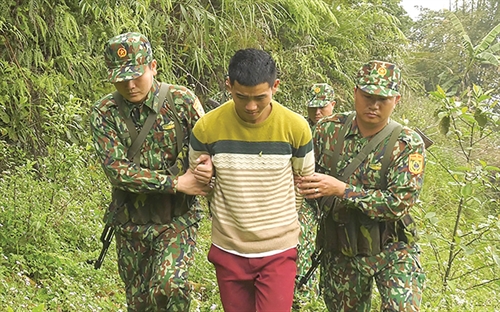
 Human trafficking victims who stay in social relief establishments would receive emergency protection as well as essential needs, medical support, psychological counseling and travel expenses.


Such is proposed by the MOLISA in a draft decree guiding the implementation of the 2011 Law on Prevention and Combat of Human Trafficking.

Ly Seo Ca, a human trafficker, is caught red-harded by Lao Cai province’s border guard__Photo: Internet

Eligible for support policies include Vietnamese citizens, stateless persons permanently residing in Vietnam, foreigners trafficked in Vietnam, trafficked foreigners returned via Vietnam, persons who await verification of trafficked victims or verification of identity or accompanying minors of victims.

During their stay at social relief establishments, victims would be provided with meals, personal things, basic medical examination services and free health insurance cards. If a victim suffers a serious disease and must be transferred to a health facility for treatment, medical examination and treatment expenses must comply with the law on health insurance. In case a victim dies but his relative can neither come nor afford to bury him, the social relief establishment where he stays would take charge of conducting the funeral.

Victims would also receive psychological counseling during their stay at these establishments. For juvenile victims, social relief establishments would contact with their families to assess the level of safety before the victims return to their families or places of residence. If victims need protection, district-level Divisions of Labor, Invalids and Social Affairs or police offices or border guards would ensure safety for them on the way to their places of residence.

National plan on adaptation to climate change approved

14:23 |

 Requirements on adaptation to climate change will be integrated into the nation’s strategies and master plans, according to the national plan on adaption to climate change during 2021-30, with a vision toward 2050.


Under Prime Minister Decision 1055/QD-TTg dated July 20, the plan is aimed to minimize vulnerability and risk of climate change impacts by strengthening adaptability of the community, economic sectors and ecosystems.

It also sets forth tasks and puts forward solutions for achieving the above-said targets, which are divided into three phases.

Specifically, during its first phase of 2021-25, the plan will focus on improving mechanisms and policies on climate change adaptation, preparing legal grounds and technical foundations for integration of climate change adaptation into policies, strategies and master plans, and performing prioritized tasks and implementing solutions to adapt to climate change and mitigate damage caused by natural disasters, and changing weather patterns.

For the 2026-30 period, greater efforts will be made to further enhance the state management of climate change and raise adaptability of economic sectors, the community and ecosystems to complicated developments of weather and climate.

Actions to mitigate climate change-related risks while boosting socio-economic development will also be intensified in this period.

Between 2030 and 2050, based on results achieved in the previous phases, the plan will concentrate on improving adaptive ability of people, infrastructure facilities and ecosystems to quality of people’s lives and ensure sufficient provision of food, energy and water, gender equality, social welfare and public health care, and sustainable national development amidst climate change and natural disasters

Vietnam protects workers amid COVID-19 crisis

21:23 |
Businesses and workers are switching to online recruitment

The COVID-19 pandemic took its toll on both the society and the economy during the social distancing period, with millions of family businesses and thousands of companies having to temporarily stop operations. As time went by, more and more jobs disappeared.

Labour market suffers the COVID-19 brunt

According to a survey by the General Statistics Office of Vietnam on affected enterprises and reports from localities on the problems facing their workforce, as of mid-April, there were 5 million workers impacted by the pandemic. About 84.8 percent of questioned firms said they were experiencing difficulties due to COVID-19.
The International Labour Organization (ILO) in Vietnam said the influence of the pandemic on the labour market might become clearer in the second quarter.

Representatives of exporters in the garment-textile and leather-footwear sectors said their biggest US and EU clients had requested rescheduling delivery deadlines, stopped signing new contracts, and even cancelled existing contracts. New contracts for June and following months are yet to be negotiated and the chance of contract recovery by year’s end remains low.
The electronics industry has also borne the brunt of the disease, with Samsung’s global and production forecast set to drop. Samsung Vietnam, meanwhile, planned to cut its export target to about 45.5 billion USD in 2020 compared to 51.38 billion USD in 2019.

ILO experts predicted that by the end of the second quarter, the crisis might negatively impact the livelihoods of between 4.6 and 10.3 million Vietnamese citizens. They will face the risk of getting their working hours and salaries cut or losing their jobs.

Switching to online recruitment

Currently, the maintaining of employment is a priority. The labour market has not been ‘frozen’ but switching to online recruitment to adapt to the new context.
On April 24, to support job seekers amid the pandemic, the project “200,000 job opportunities to assist workers and enterprises in overcoming COVID-19” was launched on four popular recruiting-service websites, namely timviecnhanh.com; vieclam24h.vn; viectotnhat.com; and mywork.com.vn. After less than a week, it attracted registration from 4,000 companies and curriculum vitae from over 1,500 workers.

Duong Thi Tuyet Trinh, who oversees the recruitment section of the project, said: “From the four websites, we calculated that over 10,000 firms have demand for more than 300,000 workers to fill 30,000 positions.”

Meanwhile, Navigos Search, which offers recruiting service targeting professionals, is implementing a “Career Support” campaign to connect job seekers to their most suitable recruiters. In the first week of the pilot run, the campaign received registration from over 1,200 employees across Vietnam.
Nguyen Phuong Mai, CEO of Navigos Search, said: “Vietnam has shown its capable of controlling the disease and begun easing social distancing measures, hence positive developments in demand for recruitment. A number of firms have stepped hiring new employees to quickly recover their production and business.”

Solving the puzzle of the “double crises”

Vietnam is among leading countries globally in terms of public health. It is time for the nation to show its similar excellency in tackling socio-economic and workforce challenges, said ILO Vietnam Director Chang-Hee Lee.

He praised the country’s introduction of economic stimulus and enterprise support packages.

Lee said: “I would like to emphasise that the Government direct its support and subsidy package to enterprises which make best efforts to retain workers and to minimise layoffs, by making adjustment to working hours, job sharing, on-the-job training, wage cuts which are consulted with trade unions and workers. It can encourage enterprises to make the best efforts to retain workers or minimise layoffs. Then, it can slow down the process of layoffs, minimising the societal shock it can trigger, while preserving workers’ productive capacity for a quicker post-COVID 19 recovery.”

COVID-19 is a global crisis. Even when Vietnam could be capable of controlling the disease, it would still be affected as its trade partners might still be struggling with the pandemic.
Lee noted: “It is important to minimise the impacts of various containment measures on micro-enterprises, family business and rural agricultural communities. These are the businesses that sustained Vietnam during the wars and economic crises in the past. However, the current pandemic and social distancing measures are causing a heavy strain on their capacity to absorb economic and social shocks. When there is an abrupt collapse of global demand for Vietnamese goods and services, or a disruption of global supply chains, millions of micro-enterprises, family businesses and rural farming communities provide subsistence support. Therefore, it is urgent to allow them to play their roles at this critical juncture, with the Government’s support.”

Mai said that COVID-19 has interrupted the global supply chain, making firms aware of the necessity of supply sources and production diversification and of not relying on a country. Such facts have given a boost to a wave of shifting investment and production facilities to Southeast Asian countries, including Vietnam as the most attractive destination.

The COVID-19 combat is not only a health challenge. Measures introduced to protect the public health must also need to ensure livelihoods of residents. If people’s livelihoods are not guaranteed, governments will fail in protecting them in the fight against the pandemic.

Vietnam’s rice prices climb to world’s highest

21:21 |
Vietnam’s ST25 rice - the best rice in the world

The prices of Vietnam’s exported rice have been rising since mid-July, outstripping Thai rice to record the highest prices in the world, according to the Vietnam Food Association (VFA).

Data as of August 14 showed Vietnam’s 5% broken rice is traded at US$493-497 per tonne while the same rice from Thailand and Pakistan is listed at US$473-477 and US$423-427 respectively.

Indian rice is even lower at US$378-382 per tonne.

This is the first time in the past 30 years that Vietnam’s rice prices have surpassed Thai rice, said Nguyen Van Don, Director of the Tien Giang Province-based rice exporter Viet Hung.

In addition to 5% broken rice, other Vietnamese rice varieties are also selling at higher prices on the global market.

The DT8 variety is being exported at US$570 per tonne, compared with last year’s peak of US$540 while the export prices of the 5451 jasmine rice have also increased by US$40-50 from the previous crop’s highest level of US$500 per tonne.

Many rice exporters stated that Vietnamese rice is being bought at higher prices thanks to its improved quality and the availability of supply and quick delivery amid the coronavirus pandemic also make Vietnamese rice a favourite of foreign buyers.

According to the Ministry of Agriculture and Rural Development, Vietnam exported 3.9 million tonnes in the first seven months of 2020, earning US$1.9 billion, up 10.9% from the previous year.

The Philippines is currently the largest purchaser of Vietnamese rice, accounting for 37% of Vietnam’s total rice exports.

The Party’s leadership in the August Revolution

20:38 |

 1. The historical significance of the 1945 August Revolution

The 1945 August Revolution of Vietnam is amongst the most typical ones in the world modern history in the 20th century, being ranked second only to the Russian October Revolution of 1917. The victory of the Russian October Revolution ushered in a new page in the human history as the era of transition from capitalism to socialism on a global scale. That revolution proved that socialism as a scientific theoretical doctrine and revolutionary ideal and goal had really become a new-style social system.

The August Revolution of Vietnam was led and organised by Nguyen Ai Quoc - Ho Chi Minh - an ideological and organisational genius and by a true revolutionary Party which he himself had founded and trained, bringing independence and freedom to the Vietnamese people, opening up a new era of national independence and socialism in our country’s development history. National independence associated with socialism became Vietnam’s principle of development by which the country would align national liberation with national development and gradually move straight to socialism without a preceding capitalist stage. The August Revolution was persuasive evidence of Marxism-Leninism developed and flexibly applied to Vietnam’s practical conditions. At the same time, it strongly encouraged other oppressed peoples, stimulated the revolutionary movement for national liberation in independent and colonised countries, and marked a turning point in the struggle against the shackles of colonialism for the sake of national self-determination.

The August Revolution changed our people’s life and destiny, abolished the yoke of combined colonialism and feudalism which had existed in 80 years, enabled our people to escape slavery and master the country, and opened up the best outlook for the Vietnamese people in the modern age. That was a miraculous revival of our population of 20 million and confirmed the perfect accuracy of Ho Chi Minh’s forecasts. Since then, over the past 75 years, the Vietnamese people have surmounted numerous difficulties and challenges, defeated colonialism of both old and new styles, firmly protected national sovereignty and unification, and step by step constructed socialism. Besides, Vietnam has remained steadfastness in its renewal policy towards socialism and actively, proactively integrated into the world so as to create new advantages and strengths for the present-day Vietnamese revolution. Over the past 75 consecutive years under the Party’s leadership, with nearly 5 million party members among nearly 100 million people, Vietnam is well on track to reach the goal of wealthy people, strong nation, democracy, equality and civilisation. The spirit and vitality of the August Revolution as an everlasting flame will shed light on our nation’s journey to future under the motto: “Nothing is more precious than independence and freedom,” with a burning desire for “independence, freedom and happiness,” thus making significant contributions to the world revolution.

2. The Party’s leadership in the General Uprising - the August Revolution - its vision, strategy and action

To correctly evaluate the Party’s leadership in the August Revolution, we should take its entire process into consideration. The Revolution broke out and became victorious within a fortnight. However, in fact, it had taken our Party 15 years to make necessary preparations since its inception. The Brief Political Platform and Brief Policy designed by Nguyen Ai Quoc and ratified by the Conference to establish the Communist Party of Vietnam on February 3rd, 1930 as its first Political Platform advocated “conducting a bourgeois revolution of civil rights and a land revolution towards communism.” Politically, those documents determined to fight to “overthrow colonialism and feudalism, completely liberate Vietnam, establish a worker-peasant-soldier government, and organise a worker-peasant army.” Those documents also identified the Vietnamese Revolution’s strategies and guidelines, stressing that revolution in a colony would be a type of proletarian revolution, we would conduct a people’s democratic national revolution to move straight to socialism, and we align national liberation with class, social and human liberation. Since its inception, our Party has fully understood that communism would be the long-term goal and future of our revolution, while correctly setting the initial, specific, main revolutionary goal of “toppling the French colonialism and Vietnamese feudalism and completely liberating our country.”

According to the Brief Political Platform and Brief Policy, revolutionary forces must gather all Vietnamese workers and peasants and the working class must be the leadership. To carry out a national liberation revolution, those documents confirmed revolutionary violence, emphasising that we “would not make any concession on workers and peasants’ benefits or enter into any negotiation”; “we must bring into play self-reliance and take advantage of solidarity and support from other oppressed peoples and the world proletariat, particularly the French proletariat.” Regarding the Party’s leadership role, “the Party is the vanguard of the proletarian army including a large number of members of the working class who are capable of leadership over the masses.” From the Party’s inception to the General Uprising to seize power for the people in the August Revolution of 1945, the Party exercised its leadership over our people’s extensive, vehement revolutionary movements against the French colonialists’ suppression and attacks of terror in order to develop revolutionary forces amongst the masses and keep consolidating its leadership role. Based on changes in the situation, the Party opportunely adjusted its guidelines and revolutionary task but always remained steadfastness in its revolutionary goal and method and its strategy for great national unity as well, which were consistent in the Brief Political Platform and Brief Policy designed by Nguyen Ai Quoc and also mentioned in the Party’s Political Platform (October 1930). It launched and led the revolutionary movement of 1936-1939 as a general exercise for the 1945 August Revolution. Meanwhile, the revolutionary movement of 1939-1945 under the Party’s leadership acted as a turning point and a determinant to the victory of our national liberation revolution whose peak was the General Uprising and the August Revolution in 1945.

The Directive entitled “Shooting between Japan and France and our actions” by the Party Central Committee Standing Board on March 12th, 1945

Between 1940 and 1945, the global and domestic situation changed quickly together with opportunities and challenges for our country’s revolution. At that time, Nguyen Ai Quoc with his special vision correctly analysed, assessed and anticipated the situation and our revolution’s prospect to quickly make sound, timely decisions. In that period, our revolution was placed under the Party’s sound, acute leadership and direction closely associated with the great vision, knowledge and creativity of Nguyen Ai Quoc - Ho Chi Minh as an ideological and organisational genius of the Party and the soul of the national great unity block. Notably, after his 30-year journey to find the way to save his nation and liberate his people, Nguyen Ai Quoc came back to his country and took charge of leading the Vietnamese revolution together with the Party’s Strategic Staff. It should be noted that at the Party Central Committee’s 8th Meeting (May 1941) in Pac Bo, Ha Quang, Cao Bang chaired by leader Nguyen Ai Quoc, the Party completed new guidelines, opportunely changed its strategy, put the task of national liberation first, and established the Vietnam Independence League Front (aka the Viet Minh Front). According to the 8th Meeting, our government would be “a union of all people” and we would form a “democratic republic government,” conduct an armed general uprising and placed emphasis on the Party building, particularly the personnel work. Besides, all activities of the Party would be centred on national salvation. After the Meeting, a series of directives and resolutions by Ho Chi Minh and the Party Central Committee were issued and quickly executed at the revolutionary base. The Directive on founding the Vietnam Propaganda Liberation Army Team as the Party’s Military Platform stressed that “politics is more important than military; personnel first, guns later; winning the people’s hearts and minds first, we would have guns later.” Our revolutionary Army was from the people and would serve them. The people would serve as the foundation for the Army. Ho Chi Minh and the Party Central Committee opportunely decided to postpone launching a guerrilla war by the inter-provincial party committee of Cao - Bac - Lang as the time was not ripe. Immediately after the Japanese coup against the French on March 9th, 1945, the Party Central Committee Standing Board released the Directive entitled “Shooting between Japan and France and our actions”. On March 15th, 1945, the Viet Minh Front issued the Proclamation against the Japanese for National Salvation. From the 15th to the 20th of April, 1945, the Northern Military Conference decided to merge the National Salvation Army with the Vietnam Propaganda Liberation Army Team into the Vietnam National Liberation Army and directed the establishment of local uprising committees.

The greatest events in the revolutionary movement between 1939 and 1945 were the Party’s National Convention and the National People’s Congress in Tan Trao. The Party’s National Convention (August, 13th, 14th, and 15th, 1945) decided to opportunely launch a National General Uprising, seize power before the Allies would enter our country, form the National Uprising Committee headed by General Secretary of the Party Central Committee Truong Chinh, and issue the Military Order No.1. Knowing Japan’s surrender to the Allies, Ho Chi Minh shortened the Party’s National Convention and immediately summoned the National People’s Congress (on the 16th and 17th of August, 1945) which ratified 10 policies of the Viet Minh, established the National Liberation Committee as a Provisional Government, and adopted National Flag and National Anthem. After the Congress, he sent a letter to call for a national general uprising: “This hour is a decisive one for our nation's destiny. Let us all stand up and fight tenaciously for our own liberation.” With those historic decisions, across the country, local uprisings broke out: the 19th of August in Hanoi, August 23rd in Hue, and 25th August in Saigon. The General Uprising was successful in the whole country. On September 2nd, 1945, in Hanoi, Ho Chi Minh read the Declaration of Independence of the Democratic Republic of Vietnam ending more than 80 years of colonialism and thousands of years of feudalism in our country, bringing power to our people.

Important resolutions and directives by our Party and sound, timely decisions by Nguyen Ai Quoc - Ho Chi Minh at the crucial moments demonstrated their clever leadership in the August Revolution’s process so that the General Uprising and the August Revolution would end in success. The Party’s clear-sighted leadership associated with Ho Chi Minh’s ideological and organisational genius in the General Uprising - the August Revolution provides the country’s revolution and development with valuable lessons, while proving the sustainable value of our Party and Ho Chi Minh’s ideology on national independence and socialism.

3. Theoretical overview of the August Revolution

The August Revolution resulted from our Party’s flexible application of Marxism-Leninism to Vietnam’s practical conditions via its proper guidelines, scientific revolutionary method, and flexible strategies. The Party’s political direction was maintained and opportunely made relevant to the situation, particularly to major turning points and revolutionary opportunities. Our Party successfully managed the relationships between nation and class as well as between opportunity, advantage and strength. The Party and leader Ho Chi Minh excellently realised Marxist ideologies on revolutionary science and art in the country’s armed revolution to seize power, particularly Lenin’s instructions: “careful analysis of a specific situation - that is the nature and soul of Marxism,” “as the truth is specific, a revolution must be creative,” “take the unchangeable against the changeable.” Those are significant lessons for the Vietnamese revolution drawn by our Party and President Ho Chi Minh.

Our Party and Uncle Ho comprehended and flexibly applied the art of winning victories step by step, prepared the force, developed the revolutionary movements of 1930-1931, 1936-1939, and 1939-1945, taken advantage of the opportunity, and overcome challenges to achieve the decisive and complete victory. They thoroughly grasped the revolutionary goal and direction, knew how to properly adjust the task in each period, and made best use of internal and external revolutionary forces. At the ripe moment of historic starts for the country’s destiny, our revolution broke out and took place extremely rapidly; hence, we had to seize the opportunity.

Our Party combined politics with military, creatively applied the ideology of revolutionary violence, and brought into play the national spirit and the people’s aspirations for independence and freedom. The strategies for fostering great national unity block and organising the fronts in the revolutionary movements, particularly between 1941 and 1945 added a massive incentive to the revolution. Moreover, the August Revolution was successful, thanks to the courage, sacrifice and loyalty of cadres, party members, soldiers and all citizens.

Our Party and Ho Chi Minh attached special importance to building the Party, the fronts and the armed forces, educating and encouraging the people to opportunely satisfy the requirements set by the revolutionary situation. That is also a lesson for our Party and revolution.

Historic decisions by the Party’s National Convention and the National People’s Congress as well as the establishment of a provisional government prior to the declaration of independence in the August Revolution helped diversify Marxist-Leninist revolutionary theories and practices. Our Party and Ho Chi Minh demonstrated their abilities and political zeal when they determinedly gained national independence and formed a government prior to the Allies’ infiltration into our country. It is worth noting that after two months in power, our Party had to dissolve itself and operate in secret (November 1945) so that the national interests would be put first.

Those lessons learnt from the August Revolution on seizing and maintaining power, liberating and developing the country, and associating national independence with socialism will be forever valuable to our country’s development, renewal and international integration process.

VN highlights importance of strengthened cooperation, int'l solidarity in COVID-19 fight

20:37 |

 Viet Nam underscores the importance of strengthened cooperation and international solidarity to successfully contain the COVID-19 pandemic.

Deputy Prime Minister, Foreign Minister Pham Binh Minh attends the High-level Open Debate of the United Nations Security Council on Pandemics and Challenges to Sustaining Peace, held in form of online meeting, August 12, 2020 - Photo: VGP/Hai Minh

Deputy Prime Minister, Foreign Minister Pham Binh Minh made that statement while attending the High-level Open Debate of the United Nations Security Council on Pandemics and Challenges to Sustaining Peace, which was held in form of online meeting on August 12.

The event attracted the participation of Foreign Ministers of Indonesia, Estonia and South Africa, Minister of State of Germany and UN Secretary-General Antonio Guterres, former UN Secretary-General Ban Ki-moon and representatives of the UNSC member countries.

Deputy PM Minh referred to the impacts of the pandemic to all aspects of lives, especially conflict-affected areas in the world, adding that pandemic threatens to wipe out hard-won peace-building gains and worsen the already complex and fragile situations, especially the humanitarian situation. 

Such a multi-dimensional crisis demands multi-dimensional solutions, stressed Minh, adding that at national level, a whole-of-government approach is needed to tackle the pandemic from a disease-control perspective, and at the same time strengthen institutions, build trust and foster co-operation. 

Special support must be given to the most vulnerable in conflicts and health crises, particularly the elderly, women and children, persons with disabilities, refugees and displaced persons. 

Globally, a threat like COVID-19 can only be curbed by working together through multilateral efforts, Minh said.

He welcomed the adoption of Security Council Resolution 2532, and the Secretary-Generals appeal for an immediate global ceasefire and facilitation of humanitarian activities.

Commending the UN peace operations for continuing to fulfill their crucial mandates and support host countries, despite even more challenging operating environment, Minh urged the UN peace-building architecture, from headquarters to field operations, to take coordinated actions and deliver as one.

He went on to say that sustaining peace in a time of pandemic can generate great impact even from the smallest actions to win the hearts and minds of the local community.

As of early August 13, Viet Nam confirmed 883 COVID-19 cases including 409 recovered cases and 18 fatalities./.


Được tạo bởi Blogger.